I got to bird-watch all autumn long with my mom, my old friend Amanda, and my new friends at the Whitman Outdoor Program. I've whittled down my photos so you can enjoy the BEST of our tri-state birding adventures.
(And remember, you can watch a high-resolution slideshow by clicking on any photo.)
Washington
A great horned owl watches us at Bennington Lake.
Two frogs were left high-and-dry at the edge of the low lake.
This noisy northern flicker lives in the tree outside my bedroom window!
A northern flicker was also our Outdoor Program trip's first sighting at McNary National Wildlife Refuge.
A white-crowned and a golden-crowned sparrow show off their different head wear.
A western grebe repels water like Gortex.
She caught a fish!
A murder of crows heads... somewhere.
Amanda and Mom look out over the Snake River from Chief Timothy State Park. Could the lighting be any more perfect?
Every clump of brown grass was crowned with a voluptuous black lady in her web.
This spider had a minuscule suitor on her blade of grass!
Take a moment to admire those pin-striped eyeballs...
Wait a minute... these aren't birds anymore! I digress.
A yellow-rumped warbler shows off what its mama gave it.
A prairie falcon or a male merlin?! The topic of hot debate! Update: thanks to iNaturalist we have confirmation that this is a merlin!
Can you pick out one of these things that doesn't belong?
A snow goose among the Canada geese!
An old steamboat passes by a grain elevator.
Amanda and I overlook the Snake River.
Oregon
A red-breasted nuthatch picks at bark in the Blue Mountains.
A mystery bird! A off-color American robin? A Townsend's solitaire? Update: this has been identified as a female western bluebird!
A varied thrush peeks out from the boughs of a Douglas fir.
Mother and fawn white-tailed deer.
I had to balance my camera on a signpost and set a timer... I was terrified the wind would knock it off!
Idaho
A red-tailed hawk displays that red tail as it soars over Mann Lake.
They have beautiful wings, too!
One killdeer and two pectoral sandpipers.
Canada geese take flight.
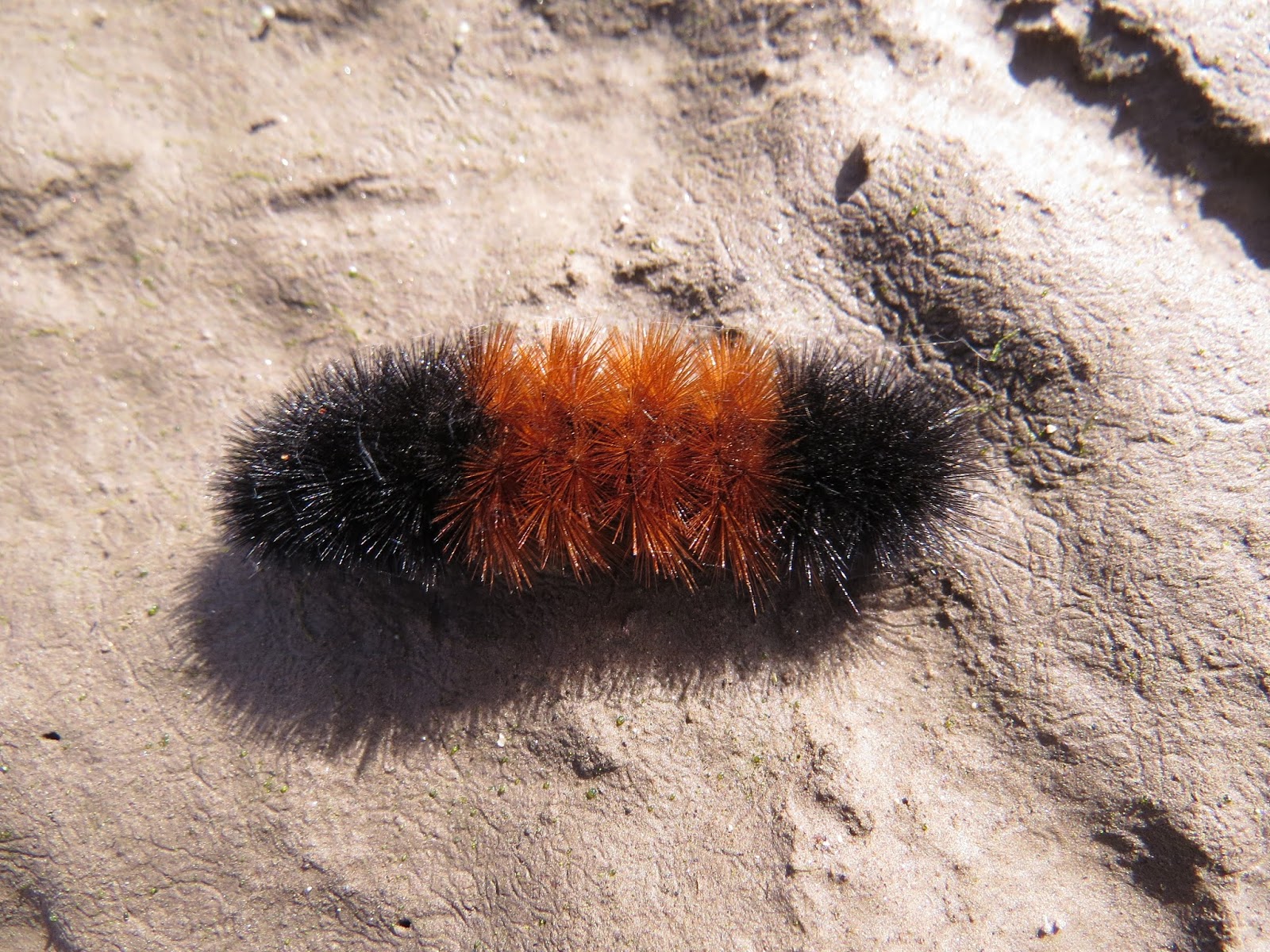
A woolly bear on the muddy bank of Mann Lake.
A Bonaparte's gull herds his sheep... I mean his long-billed dowitchers.
A flock of female common mergansers.
We took a tumble in the mud! Like mother like daughter.
Amanda to the rescue! Just like that time she pulled me out of the salt-lick mud in the Amazon. <3
Dozens of large freshwater snails were burrowed in the exposed mud banks.
A small flock of American pipits flitted along the railroad berm.
Tri-State Birders conquer Mann Lake!
Thanks to all the birds and birders, and the occasional bug, too. It wouldn't have been any fun at all without you!
Today we strolled through the Johnston Wilderness Campus, a piece of wooded land owned by Whitman College. The handful of cabins, and the astonishing number of bunk beds they house, are open for use by Whitman students, faculty and staff.
Amelia tests the cold water of Mill Creek.
Steep rocky cliffs rose on both sides.
I felt like I was home in a western Washington coastal forest as I wandered among evergreens and squishy moss through a persistent grey drizzle. The Doug firs were particularly familiar.
The grand firs, with their flat needles, reminded me of the absent western hemlocks. The turquoise Engelmann spruce, small and lonely in its deer cage, substituted for the Sitka spruces I was expecting, and the majestic western red cedars seemed prehistoric as usual.
Our professor, Bob, points out a stand of aspen.
Bob's 11-year-old dog Kili is still as spunky as a puppy.
One color stood out as discordant: the lime-green needle tufts of the western larches. Those trees are utterly foreign to me: a conifer that loses its needles?!
The five larches we could see from our resting spot on a steep mountainside meadow reminded me I wasn't in a coastal lowland forest at all; I was in the strange misty peaks of the Blue Mountains in eastern Oregon.
Hiking across an ecotone into a south-facing subalpine meadow. Notice the lime-green larches in the background.
Our resting place had a very steep grade.
I tried to capture the steepness with a photo facing up the hillside.
I love exploring this new habitat, and I hope I'll find a way to get back out here over the next two and a half years after my environmental studies course ends -- maybe as part of Semester in the West!
... Stay tuned for that dream.
Even in hot pink pants, Yidi blended right in with the fall foliage.
The identity of this cone had us stumped.
My botanical samples: ponderosa pine, cottonwood, grand fir, western red cedar, maple, Douglas fir, yew, alder, and a non-native Port Orford cedar.
Have you ever been on a hawk watch? Until last month, neither had I!
I was lucky enough to get invited on the Blue Mountain Audubon Society's Saturday morning field trip, a hawk watch in the Blue Mountains with the legendary Walla Walla birding duo, Mike and Merry Lynn Denny.
I joined a group of 34 birders at eight in the morning at their meeting spot near Whitman. Mike and Merry Lynn adopted me for the day; I felt like I was riding with the Queen and King.
Unlike other styles of birdwatching, in which the watchers wander trails with binoculars around their necks, a hawk watch is a stationary endeavor. Our caravan parked on a pull-out where Skyline Road turns into Forest Road 64, and set up chairs so a quarter of us were facing in each of the four directions. I was on north-looking duty.
Blue Mountain Audubon Society members set up the hawk watch at a pull-out.
Hawk watching in two directions.
When somebody spotted a raptor, she would holler to get everyone's attention. Birds were identified with lightning speed. A black dot on the horizon: "Turkey vulture!" A flock of twittering brown specks: "Pine siskins!" I could barely keep up.
A soaring turkey vulture from below: bald pink head and two-tone wings.
The same bird, a turkey vulture, can be identified head-on by its dihedral (V-shaped) flight.
Our spot was ideal for hawk watching because we were sitting at a high point: raptors were attracted by the thermals rising up the steep canyon slopes, and our elevation gave us a 360-degree view. I imagined the cold waters of Lookingglass Creek way down at the canyon floor. Across the canyon I could see a grassy patch on Bald Mountain which acts as a ski slope in winter.
The steep slopes of Lookingglass Canyon.
An incredible spectacle took place between a pair of Cooper's Hawks and a raven: they chased each other, dove in free-fall, and performed acrobatic twists in a full circle around the captivated hawk-watchers. I managed to capture a moment of the show on video:
Merry Lynn led a short walk up the road, through a meadow, and down into the pine forest.
Rubber boa roadkill.
A dead white-crowned sparrow we found in the road.
A live white-crowned sparrow we found on a branch.
A red-breasted nuthatch.
A dark-eyed junco.
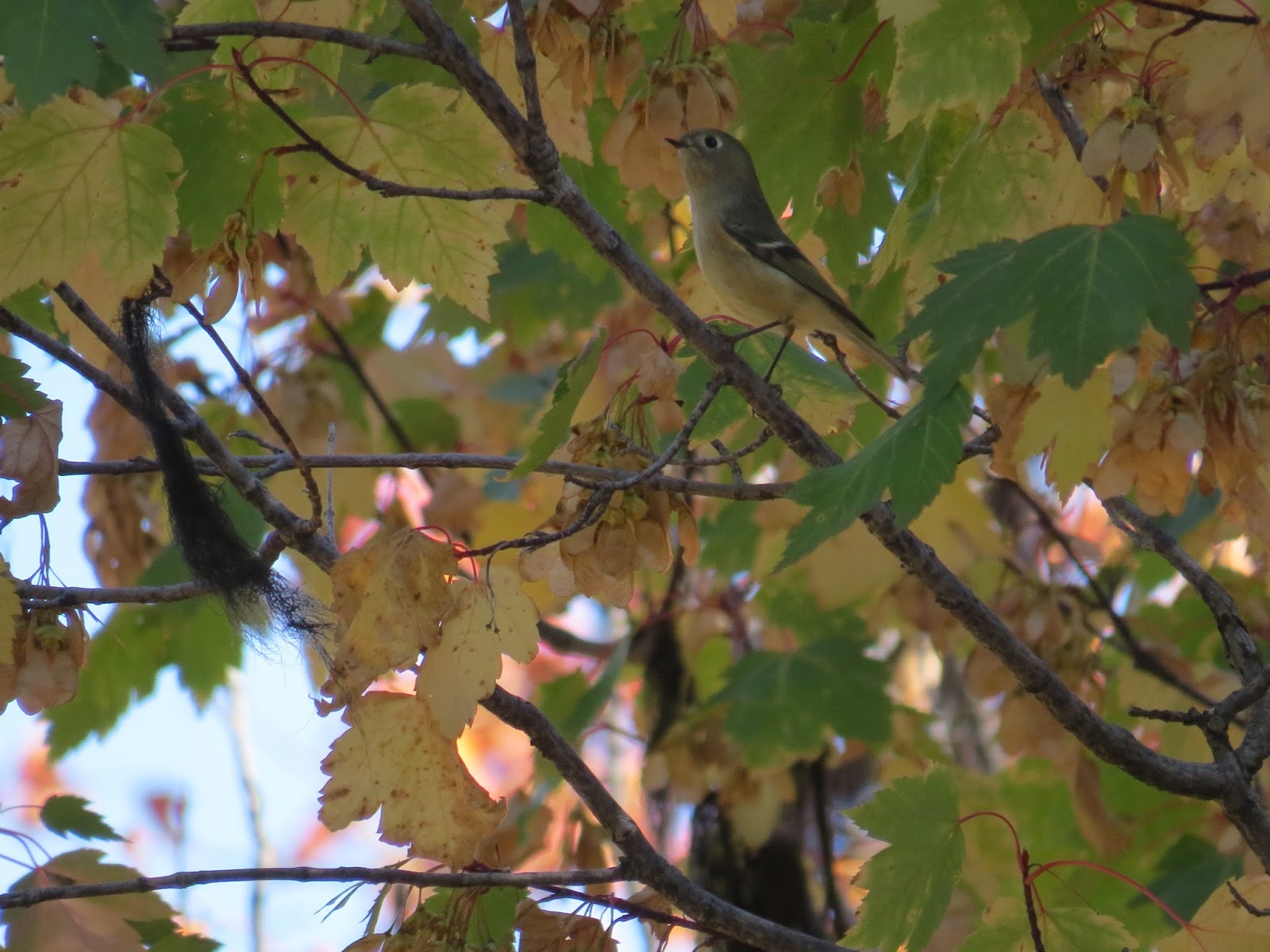
A ruby-crowned kinglet.
A yellow-rumped warbler?
A dead pine dripping with dry mosses and lichens.
An American kestrel, the littlest falcon in North America.
Fun fact: my first American kestrel sighting took place among ancient Incan ruins in Peru! (You can read about those adventures here.)
Flashback to my first American kestrel sighting at Sacsayhuamán, an ancient Incan site near Cusco, Peru.
It was great to share the experience with Walla Walla locals of all ages. I made lots of new friends including another Whitman student, Eva! I hope we will have many more birding adventures in the future.
Walking, birding, and making friends!
Eva models the spreading base of a lone pine. The tree reminded me of a lady in a hoop skirt.
Blue sky and blue hills.
After lunch the hawk-watchers dispersed, but my dedicated guides were not finished. I soon discovered that not only are Mike and Merry Lynn master birders -- they're also experts at all things natural! We explored roadside botany, native pollinators, and even rocks.
Indian paintbrush.
A little plant with soft leaves.
A lady bug on the flower of that same soft-leafed plant.
A tiny succulent.
Coyote balm.
Scarlet gilia.
Mountain brome.
Aster.
Rocky Mountain ash.
A huckleberry bush in bright fall colors.
Andocite basalt with veins of iron oxide running through it.
The insects just LOVED a yellow flower called rabbitbrush.
A different kind of hawk than we were expecting: a spiderhawk! (That's a spider-hunting wasp to you.)
A skipper -- one of fifteen skipper species native to Oregon!
A syrphid fly! It mimics a bee, but you can tell it's a fly because when it rests, it holds its wings out at an angle rather than folded back on its body.
We found two wasps battling each other in the gutter, biting and stinging! I thought one might kill the other, but in the end they both flew off alive.
We concluded the day with a drive through the back-roads, and I learned even more about human interaction with the Blue Mountains.
We met a father and son chopping wood, and I learned that National Forest land is open to personal logging.
We came across this overgrown relic: a jack fence, built years ago by forest service rangers to protect a young aspen stand from voracious elk.
This guy flew in through the car window to say hi!
The day's magic lay in all the little discoveries and unsolved mysteries. The most thrilling mystery for me was the ghostly wailing I heard reverberating throughout the hills all day. Eventually I figured out the sound's origin: bugling bull elk! I didn't lay eyes on any of the giant mammals, though. It seemed like the Blues themselves were singing.