Health Education, Health Articles, Health Blog

Showing posts with label bison. Show all posts

The Breath of Lichens: Day Four on the Alaska Road Trip

AMAZING morning at Liard River Hotsprings Provinicial Park! We got up early to bird along the boardwalk through a steamy, hotspring-fed swamp. A pair of solitary sandpipers pecked in the sloopy, carbonate-rich mud, a red squirrel chattered from the top of a stunted spruce, and cedar waxwings flashed their yellow tails. Branchless horsetails stood sentry. In my mind, we traveled back in time a million years to the land of tropical dinosaur bogs (that’s what the earth used to be like, right?) I may have spotted a pterodactyl overhead.

Boardwalk back in time.

Sloopy, light-grey mud of carbonate.

The steamy swamp.

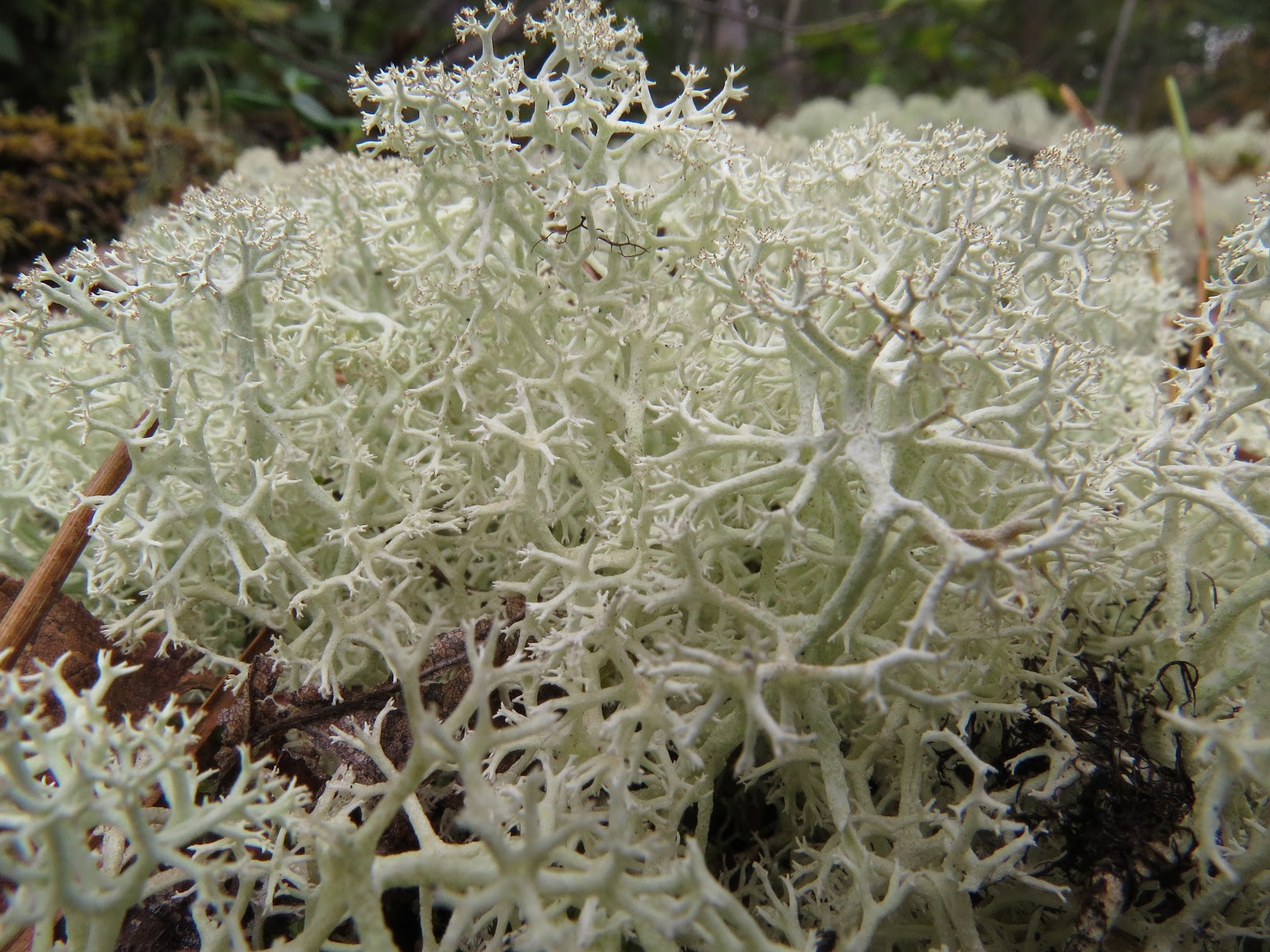
The hotsprings were dammed to provide two pools, the really hot Alpha and pleasantly warm Beta. Jane and I dog-paddle-floated through the increasingly narrow channel stacked high on either side with damp earth and dewy spider webs, ducking under logs, to discover the cold spring that fed into the Beta pool and contributed to the cold-feet-hot-ankles thermocline. As I looked straight up from my gravel-bottomed puddle, hearing the drip of cold water and smelling the breath of lichens, I could have been at the edge of the world.

No photo could do it justice.

The warm forest contains plants that wouldn't normally be seen this far north.

When we returned to the populated pools, we met a family of four from Fairbanks embarking on a road-trip marathon to Minneapolis and back. I joined the younger family members as they attempted to scale the slippery log structure and flop gracefully into the sulfurous water. (Grace was not achieved.) Their father taught us how to differentiate between stately, taller white spruce and scraggly, shorter black spruce, though I’ve yet to master the technique. He pointed out paper birch and aspen, but we have yet to pin down cottonwoods, balsams, or poplars. Oh trees! The family recommended a joint called Fast Eddy’s for when we get to Tok, Alaska. Seems like a way off yet.


Our progress was slowed immediately by a herd of bison crossing the road. Probably the same ones we saw last night in the fog.

They assert their right-of-way!

Nursing calf.

Much nicer than the mounted head we would be seeing after dinner tonight...

We stopped for a “second breakfast” of famous bison burger at Coal River Lodge and RV.

“Is it real bison?” I asked our waitress (just to be sure!) She laughed too hard to respond.

Finally, she answered, “I buy the whole bison once a year in Fort St. John, get ‘er butchered, and make the burgers to serve up here.” It was mighty delicious on a sesame-seed bun.

Coal River bison burger.

Our next birding excursion to Lucky Lake, outside the town of Watson Lake, was prompted by the Milepost’s note to look for boreal chickadees. (When a general guidebook mentions a bird species, you know it’s worth checking out!) Indeed, we found flocks of the buzzy little chickadees, swinging upside down from pine twigs and gleaning insects from spruce needles.

Boreal chickadee.

The boreal forest was also home to a western wood-pewee, yellow-rumped warbler, ruby-crowned kinglet, dark-eyed junco, hairy woodpecker, and red squirrel.

Yellow-rumped warbler.

Ruby-crowned kinglet.

Juvenile dark-eyed junco.

Hairy woodpecker.

Our path from Lucky Lake took us down to the Liard River, where we admired the jagged, tipped-on-edge geology and watched a spotted sandpiper bob its tail.

Trippy geology. (Shale chips wedged together on end -- a remnant of tectonic collisions?)

Spotted sandpiper, aka Bobby.

The wide Liard River.

Watson Lake had an awesome Signpost Forest where we took snapshots with the best signs. We left town with cold root beer, Canadian cash, a full tank of gas, and ice for the cooler.

Signpost Forest.

My favorite side-trip was the short boardwalk over Rancheria Falls, where I’m certain fairies lived among the club mosses and lichens. A Swainson’s thrush eyed us from deep in the underbrush.

Rancheria Falls.

The other half of the Falls, and your congenial hosts.

Fruticose lichen (fairy mattress).

Ascocarps (fairy drinking glasses).

Foliose lichen (fairy wedding gowns).

Shiny mushroom (fairy car).

Club moss (fairy combs).

Mushrooms (fairy tuffets).

Lobaria sp. (fairy bathtubs).

Moss, lichen, and an angiosperm coexist on a boulder (fairy town).

Swainson's thrush (fairy?)

Our day ended with liver and onions for me and meat-sauce spaghetti for Jane.

Liver and onions.

Meat-sauce spaghetti.

The restaurant included a free wildlife gallery with expertly taxidermied game. I could not believe the size of a bull moose!

Bison have such ridiculously stocky heads.

Bull moose and timber wolves diorama.

On the plaque under the moose diorama were written these words:

"A simple act of survival, played out each day in the wilderness. Not victim and villain, but components in nature, and for all, even the mighty and the clever, there will be a last morning."

As a student of ecology, these words rang true, and on the day before the birthday of my grandfather (who would have been 92 tomorrow), they brought tears to my eyes.

It was our first night in Yukon Territory, and we must be getting pretty far north… The sun was still bright in the sky by 10:30 pm when we collapsed on our beds.


End of day summary:
  • Day of road trip: 4 
  • Start: Liard River Hotsprings, British Columbia, Canada 
  • Miles traveled: 291 
  • Hours driven: 7 
  • Favorite bird sighting: solitary sandpiper (Jane), boreal chickadee (Nina) 
  • End: Teslin, Yukon Territory, Canada
    Share:

    Drunken Forest and Caribou Velvet: Day Three on the Alaska Road Trip

    After we woke up in the northern British Columbian city of Fort St. John, we couldn’t resist starting our day with a scenic and enlightening stop at… Safeway?!

    Welcome to Fort St. John, The Energetic City.

    Turns out Fort St. John, “The Energetic City,” is a petroleum-exploration-fueled industrial town of strip malls and apartment buildings. We spent our night at Howard Johnson, ate a free breakfast of hard-boiled egg and dried-out sausage (pretty tasty, actually), and picked up two salads at the Safeway deli to hold us over during the long, upcoming stretches without access to food.

    We stopped to eat the first of those salads, which I’m calling “Italian pad thai” (a bright orange oily soup of oregano and rice noodles), at Buckinghorse River Wayside Provincial Park.

    Buckinghorse River.

    There were no nature trails listed in the Milepost, so we made our own. Within a few steps of the gravel parking lot, a flock of little brown birds flew overhead into a spruce tree.

    “Crossbills!” said Jane.

    “Siskins!” said I.

    Neither of us knew what these birds were, but in our experience when birds fly overhead chittering, her birding friends always dub them crossbills, and mine dub them siskins. The birds’ bright red heads and white wing patches disqualified them as either red crossbills or pine siskins. We looked up orioles, finches, even tanagers before we looped back around to a lifer (brand new species of bird for us): the white-winged crossbill!

    White-winged crossbill.

    Look closely: you can see the purposefully-crossed bill for cracking open cones.

    We treaded down to the river and admired the “drunken forest” of black spruce on the subsiding banks, the diverse wildflowers, and the downstream swimming pools mentioned in the Milepost.

    The "drunken forest" on a disintegrating river bank.

    Aster.

    Clover.

    Buttercup?

    Yarrow?

    Fireweed.

    Buttercup?

    Dandelion.

    Jane got too hungry to wait for dinner and went beaver on me!

    At the adjacent truck stop, we bought gas at a “24-hour public cardlock,” the Northern version of a self-serve gas station, and struggled through the twelve steps.

    Cardlock, Jane, and Prius.

    How to pump gas in the North: a twelve-step program.

    There, we met a pair of bicyclists making their way down the country from Prudhoe Bay, Alaska. Their bikes were loaded with four saddlebags each, and their ribs were probably showing under their Lycra jerseys.

    “How far you trying to go?” I asked one of the bikers.

    “Argentina,” he replied, with a shrug that showed he didn’t believe they would make it. “We’ve been pushing it to 100 miles a day, trying to break the world record. I’m pretty well beat…”

    We wished them luck and took heed of their advice to buy cinnamon rolls at the upcoming town of Muncho Lake.

    A (pine?) beetle in the parking lot.

    The first half of our drive was straight with large grassy verges and many side-roads with signs for “Sour Gas Compression Plant,” “Natural Gas Exploration Patch,” and “Sulfur Pellet Station.” The so-called Energetic City of Fort St. John depends mainly on natural gas and oil exploration for its economy, with a dose of logging and heavy construction as well.

    Oil or gas exploration.

    Sulfur pelletization.

    I didn’t understand how construction could be its own industry until I saw how much maintenance the Alaska Highway requires. We were stopped or slowed every few dozen miles for construction in any stage from clearing rocks to smoothing gravel to laying down fresh asphalt. Every town along the way hosts an enormous white tent filled with gravel (maybe to keep it free from snow?) while the accompanying equipment often sits outside, exposed to the elements.

    A burned portion of the forest.

    The halfway point of our drive was Fort Nelson, where we stopped at the Trapper’s Den and tried on wildlife hides. The proprietor, who has lived her whole life in that very log cabin and avoids the “big city” of Grande Prairie, Alberta because of the traffic, advised us we’d be seeing lots of wildlife on the next leg of our journey.

    Arctic fox was so soft (shout-out to Fella!)

    Raccoon.

    And she was right! The second half of our drive was spectacular. We climbed through the Canadian Rockies, dipping above and below the alpine tree line. Jane spotted a road-killed black bear while I took a nap. Later, a dark-brown, deer-like animal crossed the road in front of us.

    “Moose?” I identified it uncertainly. It was too dark for a deer; its feet and nose were oversized, and its antlers were velvety. “I wonder when the antlers flatten out…” I thought to myself. A few miles later, another crossed the road. This time we got a better view, and Jane pronounced it a caribou. So that explains the antlers!

    Caribou!

    Not your typical "deer crossing" sign.

    We stopped for a bathroom break at Summit Lake Provincial Campground, where the cool mountain wind and glassy lake took our breath away.

    Summit Lake.

    “Watch for Stone sheep along the road,” warned the Milepost. A minute later, there they were: two brownish sheep with curved horns, a dark subspecies of Dall sheep. Around the bend, a family with a lamb. We watched them nibble salt from the gravel then effortlessly scamper up the steep cliff.

    Stone sheep!

    Soon after, an actual cow moose and her calf crossed the road, clearing up any lingering confusion about the various deer-family species.

    Moose!

    After bear, caribou, sheep, and moose, we really didn’t feel like we’d seen enough big game... Luckily, we ended the day with a herd of a dozen bison in the foggy twilight near the entrance to our night’s home, Liard Hotsprings Lodge.

    Right after this sign...

    ... We found this guy!

    And his whole herd.

    We brought our bags inside just as a deafening thunderstorm broke loose over the spruce forest, and we fell asleep to a raindrop lullaby.

    End of day summary:
    • Day of road trip: 3 
    • Start: Fort St. John, British Columbia, Canada 
    • Miles traveled: 426 
    • Hours driven: 10 
    • Favorite bird sighting: White-winged crossbill 
    • End: Liard River Hotsprings, British Columbia, Canada
    Share:

    Popular Posts

    Labels