One semester in Galapagos, where this blog was born.
One semester split among Brazil, Peru, and mainland Ecuador.
One semester camping in the Intermountain West.
Two and a half years in Walla Walla, Washington.
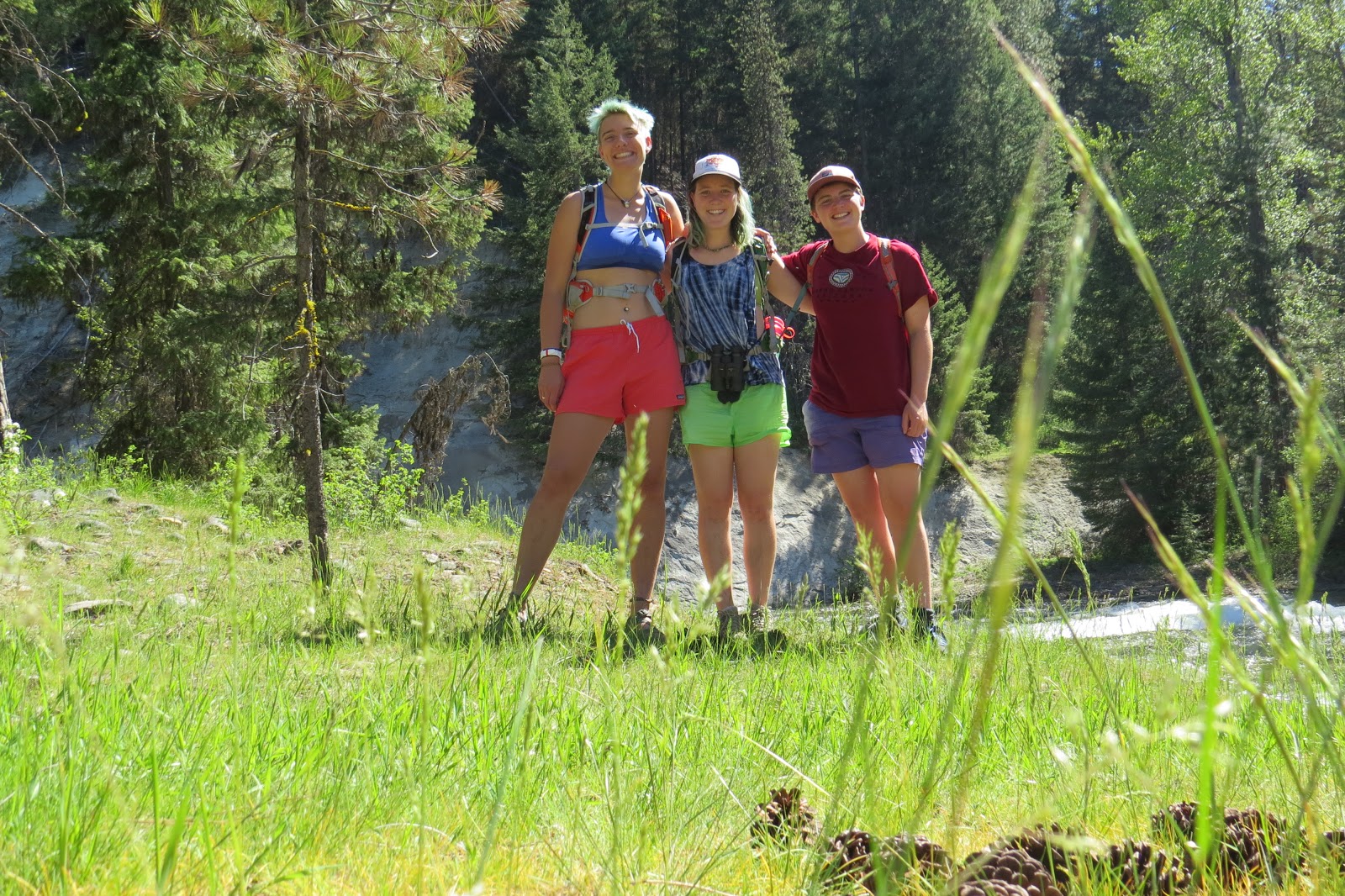
Walla Walla was the place I called home for longest since leaving high school, and saying goodbye was the opposite of easy. Luckily, I got to spend three days after graduation with my adoptive family and ultimate frisbee team, the Sweets, in the eastern Cascades.
I felt strange and out-of-place in the luxury golf resort, Suncadia, but as soon as I wandered past the mowed green turf I found myself immersed in a dry Ponderosa pine forest filled with deer, lichen, wildflowers, and songbirds.
Ponderosa pine thrive on the "sunny side" of the Cascades.
Oregon grape in bloom.
Oregon grape flowers are elegantly layered and butter-yellow.
My first Nashville warbler! He was wearing a red cap, grey hood, and yellow belly.
Chocolate lily, Fritillaria affinis.
As I sat on a log to observe the Nashville warbler mine a shrub's catkins for their nutritious seeds, I was startled to find a chocolate lily. These flowers are rare. Their underground bulbs, resembling clumps of rice, are eaten by several Coast Salish tribes. I was so excited to photograph this flower from below, I was lying motionless on my belly for several minutes, and when I sat up I saw two well-dressed joggers staring at me.
"Oh my god, we thought you were a dead body!" the man gasped.
"Just looking at a flower," I told them. "Want to see a chocolate lily?"
"Umm, that's okay," he replied. They glanced at each other and jogged quickly away.
For the moment, this forest is still filled with rare beauty on the margins between golf greens and second homes with four-gar garages, but this ecosystem is nowhere near intact. Yesterday, I saw several new concrete foundations being poured for new mansions within this gated community. Only a few tall Ponderosas stood between existing houses.
I had to ask myself, what is the appeal of living or vacationing in a place like this? If the point is to live in a dry montane forest, then the appeal has been nullified by the density of homes and roads. (And why live in a forest if you don't even stop to notice the chocolate lilies?) I think the real appeal is exclusivity. Suncadia is known for being expensive and luxurious. To own a home here is a symbol of wealth. I imagine the wealthiest residents will soon move to a more remote, forested enclave as Suncadia becomes too suburban and accessible, and deforestation will continue to reduce chocolate lily and western toad habitat in the Cascades.
Look at the chocolate lily's gorgeous brown-and-green, mottled petals and six pollen-laden stamen.
Arrowleaf balsamroot, a sign of springtime in eastern Washington.
Wolf lichen, Letharia vulpina, is neon green-yellow because of its vulpinic acid, a toxin once used to poison wolves. It belongs to the family Parmeliaceae.
Deer scat.
A very young sapling growing from a nurse-log.
A chipping sparrow in a Douglas fir.
A few Sweets around our magical, self-igniting fire pit.
On our second day, I set out for a hike with Kevin and Hardy in the Teanaway Community Forest, along the West Fork Teanaway River.
Brown-eyed sunshine, Vulpicida canadensis. This bright yellow lichen also belongs to the family Parmeliaceae, but it differs from wolf lichen due to its brown ascocarps (sexual reproductive structures) and the texture of its thallus (the main, leafy body of the lichen.)
We went skinny-dipping in a shallow pool of the river (after this photo.)
A baby western toad, Anaxyrus boreas, was swimming in our shallow pool -- or rather, we were swimming in hers.
On our third and final day, we packed into cars with all our gear from the past one to four years of living in Walla Walla. Before we headed over the Pass to our various homes, I persuaded my teammates to stop for a picnic lunch at the Northern Pacific Railroad Ponds in Cle Elum, a birding hotspot. There, I talked with another woman from Seattle, a novice birder who was exploring the area for the first time. We saw a mallard with ducklings and many species of swallows over the water.
Though I never wanted to say goodbye to Whitman, college, or the Sweets, these few days were a good transition from the bubble of school to the wide world beyond -- the birds and trees and waterways I can turn to when I don't have daily practices, weekend tournaments, dance parties, sprint workouts, weight lifting, potluck meetings, and pick-up games on Ankeny to bring me joy. At least I know I will find ultimate to play wherever I go next... and something tells me I'll be watching goofy Snapchats from my Sweets for a long time to come.
Kaitie holds a round, moss-lined nest we found on the ground. It must have blown down from a tree in the wind.
2016 began with owls. On New Year’s Day, I journeyed north through a light snowstorm to Skagit with a group of friends known as Bird Nerds Birding Club. (I met its founder, Courtney, while volunteering for Seattle Audubon’s Christmas Bird Count. Birding is the best way to make friends!)
Bird Nerds take on the Skagit.
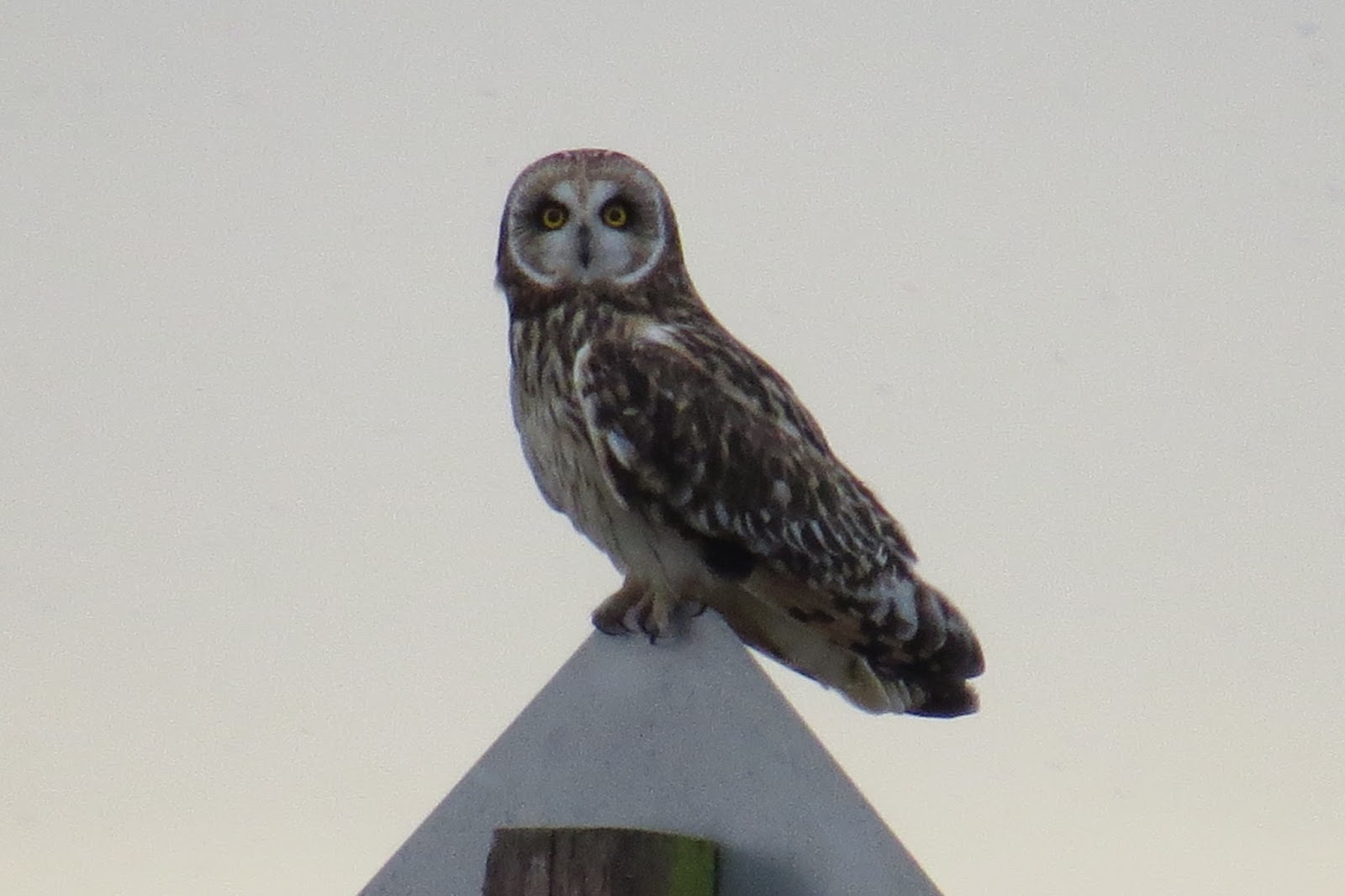
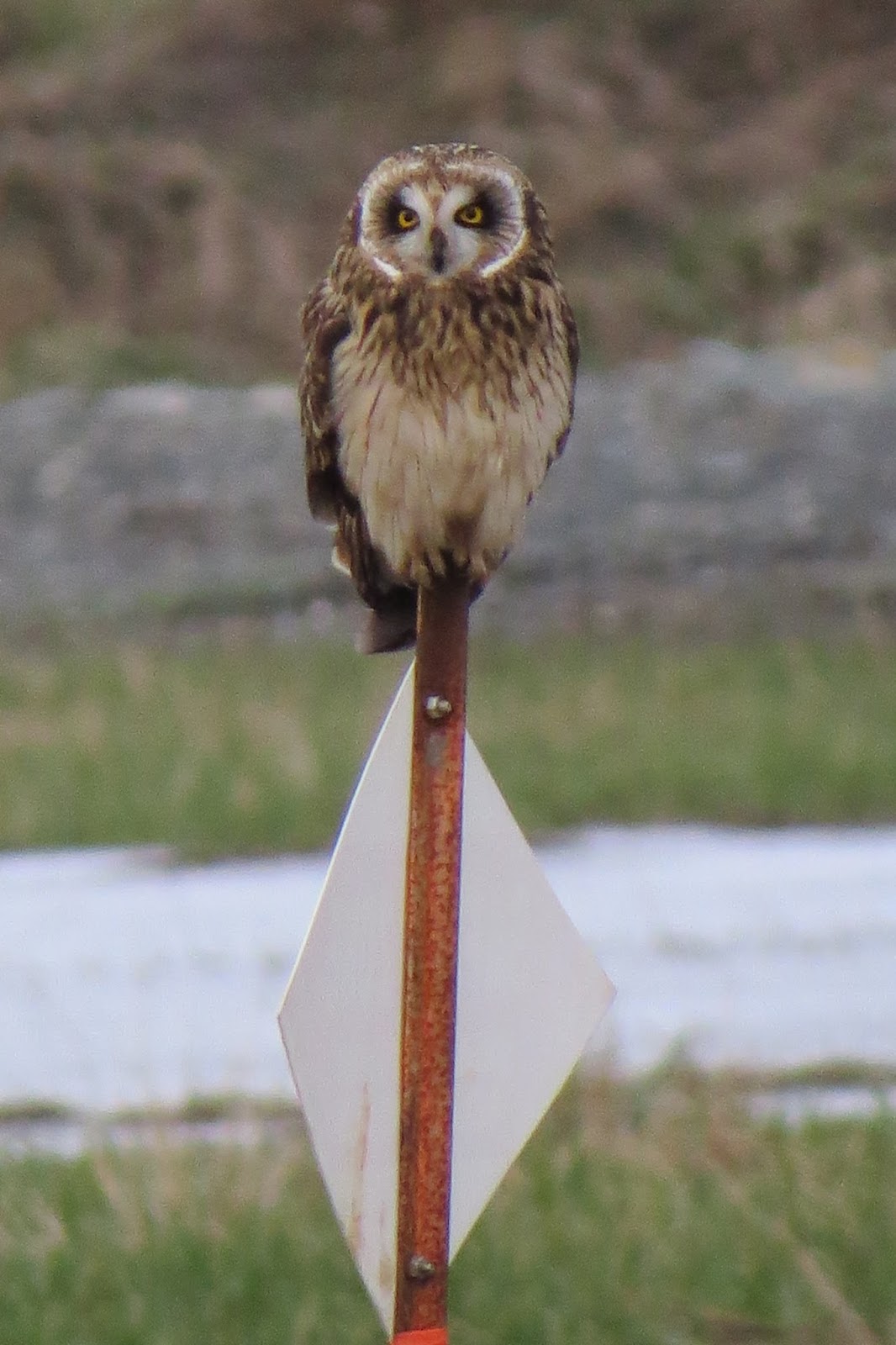
Washington State is home to fifteen species of owl, and I was lucky enough to see three of them this winter and spring. Our first stop: short-eared owls, Asio flammeus.
The dark eye shadow is quite a statement.
She liked to perch on the caution sign.
Look at that dished face for funneling the skitter-sounds of rodents into her short ears.
These owls were a lifer for me. I soon learned to recognize their distinctive flight, long-winged and loping like a butterfly’s.
Sibley's Guide describes their flight as "floppier" and "erratic."
In this neck of the woods, the short-eared owls fly by day, and they convene a following of dedicated photographers. When the owls weren’t nearby, I enjoyed watching scattered huddles of men and women in full camouflage attire, their telephoto lenses propped on sturdy tripods and transported in jogging strollers.
Can you spot the photographers?
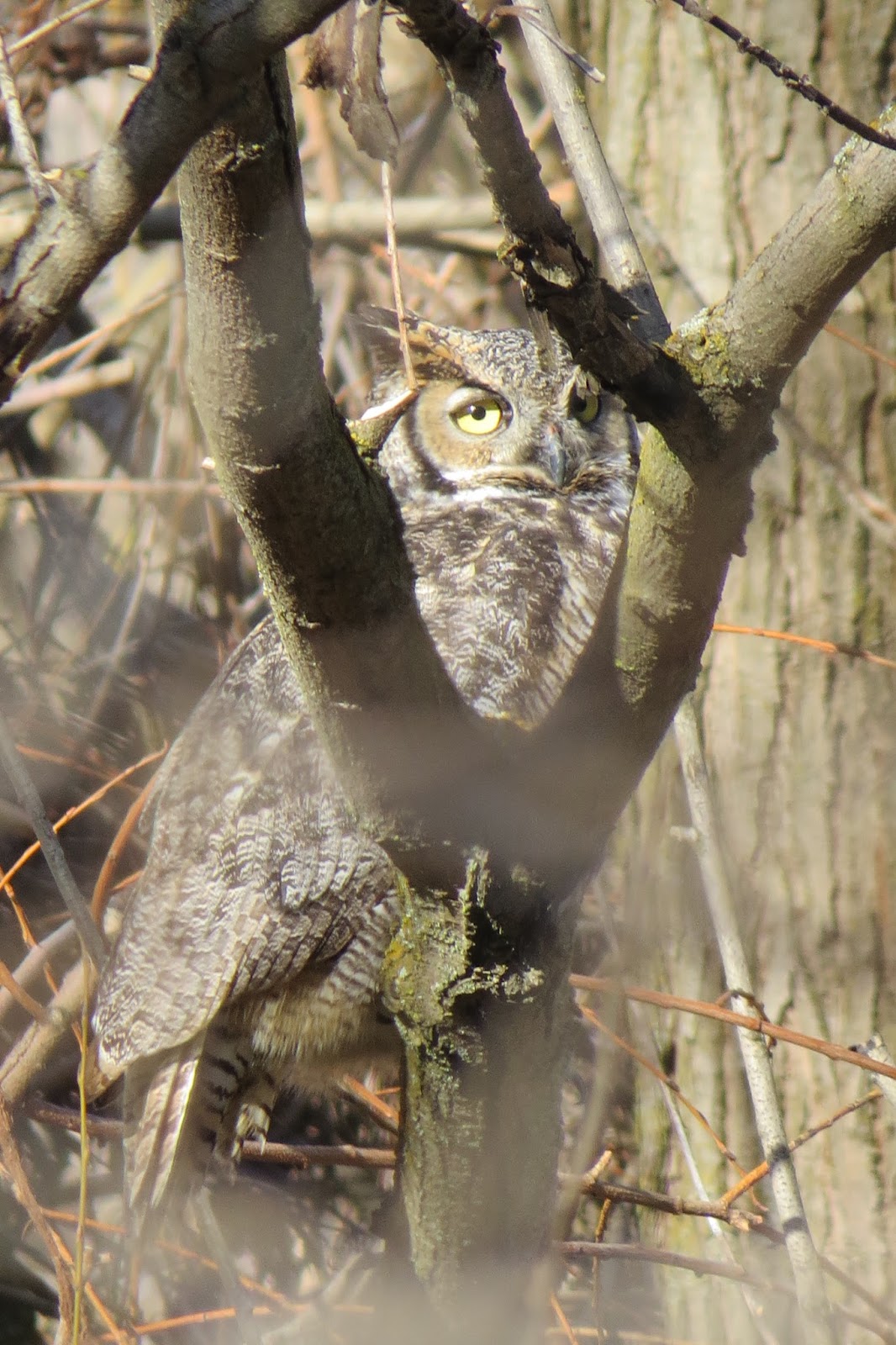
A month later, I returned to college in Walla Walla and invited Margo, Lizzie, and Molly Moo Moo to join me for a lap of Bennington Lake. Birders come in two categories – Sitters and Flitters – and this crew of budding ornithologists earned the first title with their patience. After we heard a single hoot, they took up posts off-trail for five, ten, twenty minutes until finally Margo spotted the owl. We stalked closer and watched the resident pair of great-horned owls watch us.
The great-horned owl, Bubo virginianus, is the most widespread owl in America.
Hello yellow eyes.
The baby owls thought. All owls think a lot.
"I think she's gone hunting," said Sarah.
"To get us our food," said Percy.
"I want my mummy!" said Bill.
If you know what’s up, you’ll recognize this conversation between three great-horned owl branchers from the wonderful children’s book, Owl Babies, by Martin Waddell.
Last week, near Bennington Lake, I got to meet Sarah and Percy. Bill was probably snuggling with his Owl Mother somewhere. I was on an excursion with my advisor, Tim, and several professors and classmates on Reading Day. (That’s the day between the last day of classes and the first day of finals, and it’s best spent doing anything but studying.)
An owlet basks in the sun on the parking-lot cliff.
This brancher eyed us from ten feet away.
Two hours later, she was still at her post.
You again?
Get outta here!
It’s been an incredible spring for owls. A few days later, I returned to the same lake with Thomas for a mid-finals birding break. After listening for yellow warblers in the willows, we heard a raspy cough from high within a cottonwood – it was Sarah and Percy, begging for food from their good old ma!
Sarah and Percy in a black cottonwood.
Before our eyes, an adult great-horned owl delivered a writhing gopher snake to one of the owlets.
I’ll let the video speak for itself.
Only a few minutes later, she returned with a second snake, but the first owlet (who I’m certain at this point was Sarah) begged more convincingly and snagged that snake, too. The second owlet, Percy, hunched dejectedly in the rain while Mom took a break.
Sarah polishes off her second snake in ten minutes.
“Geez, Mom, can’t you tell us apart? I’m hungry over here!” whined Percy.
As if that sighting wasn’t enough, on the last day on finals, I received a phone call from my friend Joe.
“Check your texts! I sent you a photo,” Joe instructed. “I found a bird for you to ID!”
The photo showed a puffy western screech owl, Megascops kennicottii, nestled in the knot of an oak.
“She’s right here on my street,” said Joe. “Come see!” Through the phone, I could hear the porpoise-like laugh of the owl.
Could you imagine a better owl hole?
It seems like the owl's coated in bark, or the tree in feathers.
Thomas and I went to find her, and there she was, her ruffled feathers blending with the rough bark. She eyed us with sleepy disinterest.
Maybe she was waiting to deliver a letter… or just hunt a mouse.
My dad and I took off the day after Thanksgiving for our own Green Friday adventure to Lizard Hill, a growing-up Christmas tree farm on the Kitsap Peninsula.
The moon was out, and the sky so clear we could see the snow-lined crevasses on the Olympics and the Cascades.
Pelagic cormorants (shown) and double-crested cormorants were abundant on pilings.
I had no idea there was an Atlantic salmon fish-farm named American Gold Seafood on Bainbridge Island! The gulls, however, are well aware.
California sea lions love those buoy haul-outs.
The moist, exposed dirt of Lizard Hill's old roads is the perfect substrate for lichens, such as this freckle pelt (Peltigera britannica).
This cup lichen is one of numerous Cladonia species.
Frog pelt lichen (Peltigera neopolydactyla)?? I'm having fun trying to identify these lichens. The best reference I've found for pelt lichens in the Pacific Northwest is Jason Hollinger's webpage -- if you're ever in the woods with a pelt lichen quandary, I suggest you check it out!
Lipstick powderhorn (Cladonia macilenta).
Forking bone lichen (Hypogymnia inactiva). We were lucky to find this on a twig, blown down from high in the trees. I've never seen a lichen like this before!
I saw several song sparrows and heard from many more. This one defended his territory valiantly against two small, chipping Pacific wrens.
While my dad and I were away from our car, a sly coyote left us this present. Best of all, my dad stepped in it a few minutes later!
We found a wind-felled Douglas fir (Pseudotsuga menziesii) in the road and decided to adopt her as our Christmas tree.
On our way home, we stopped at Belfair State Park to check out the shoreline. We found lots of killdeers making their two-note keen.
The river was filled with decaying salmon carcasses and one live individual who looked not long for this world.
The salmon attracted a family of bald eagles and countless glaucous-winged gulls.
It was a seaside feast!
The beach was signed for oyster harvesting, but we found only shells. Most marine invertebrates use calcium carbonate (also called calcite) to build their shells and skeletons, but the crystal structure of calcite varies. Crustaceans (crabs, lobsters, and barnacles) use low-magnesium calcite. Corals and molluscs (like this oyster) use aragonite, which is twice as soluble in water than low-magnesium calcite. That's why scientists are worried that corals and molluscs are at heightened risk of dissolving as oceans acidify. But echinoderms (sea stars, sea cucumbers, sea urchins and sand dollars) build their skeletons out of high-magnesium calcite, which is THIRTY times as soluble as low-magnesium calcite! So, if you're a sea star... drink an extra glass of milk a day?
A pied-billed grebe was hanging out at the Bremerton Ferry Terminal.
These huge plumose sea anemones (genus Metridium) remind me of cauliflower. (Can you find the photographer?)
A female red-breasted merganser joined the party.
This male surf scoter rocks the clown make-up.
On the ferry, this brave boy made friends with a hungry glaucous-winged gull.
Mount Rainier emerged to welcome us back to Seattle as the sun set behind the Olympics. Thanks, Dad, for the awesome Green Friday adventure!