Health Education, Health Articles, Health Blog

Showing posts with label Yukon. Show all posts

How Red Prius Nearly Got Bulldozed: Day Fourteen of the Alaska Road Trip

We woke up to rain and a clucking raven, apparently boasting that the hotel was named for him. We bypassed the first trailheads we came upon, partly because birds hide away in the rain, and partly because we didn’t want to get soaked ourselves.

A dark-eyed junco at our first stop.

The first hike in sunlight was Glacier Rock Trail. The first half was a wonky boardwalk through swamp and taiga (boreal forest). It was like a ramp, slanted in two directions, with occasional steps and a twisted railing. A funhouse in the forest!

Crookedy staircase.

Checkin' out the moss islands.

I’m glad we made it past the odd footing because the next part of the trail was a spectacular climb through glacial rubble. The ice has retreated so recently that only a smattering of crustose lichens have colonized these rocks. A flock of robins tweeted as they flew overhead.

Jane stands along the path of glacial rubble.

Our next stop was Million Dollar Falls Campground. Can’t skip a place with a name like that! The boardwalk here was much more sturdy – thankfully, since it projected over the waterfall at points. This waterfall was not your average river-turned-vertical. Somehow the rock substrate was angled such that the water took a diagonal 100-or-so-foot plunge, like a whitewater slide at a water park.

Million Dollar Falls.

The frothy water would have crushed any unsuspecting dippers (little black birds that dive for invertebrates in clear mountain streams) or humans. We imagined gory deaths of head injury followed by drowning… I guess this is why my mom and I have trouble enjoying any hikes that involve heights!

Weeee!

This deep green foliose lichen (Peltigera venosa?) grew on the earthen banks of the waterfall.

We passed into British Columbia and climbed the Chilkat Pass, where low-hanging fog obscured the rainy, rocky tundra. (You can find tundra when you go really north, really high, or both.) I was amazed to find this arctic biome in BC, the province that borders Washington State! Granted, BC is enormous. I was intrigued by patches of lemon-yellow groundcover. I’m still not sure if it was moss, lichen, or wildflowers.

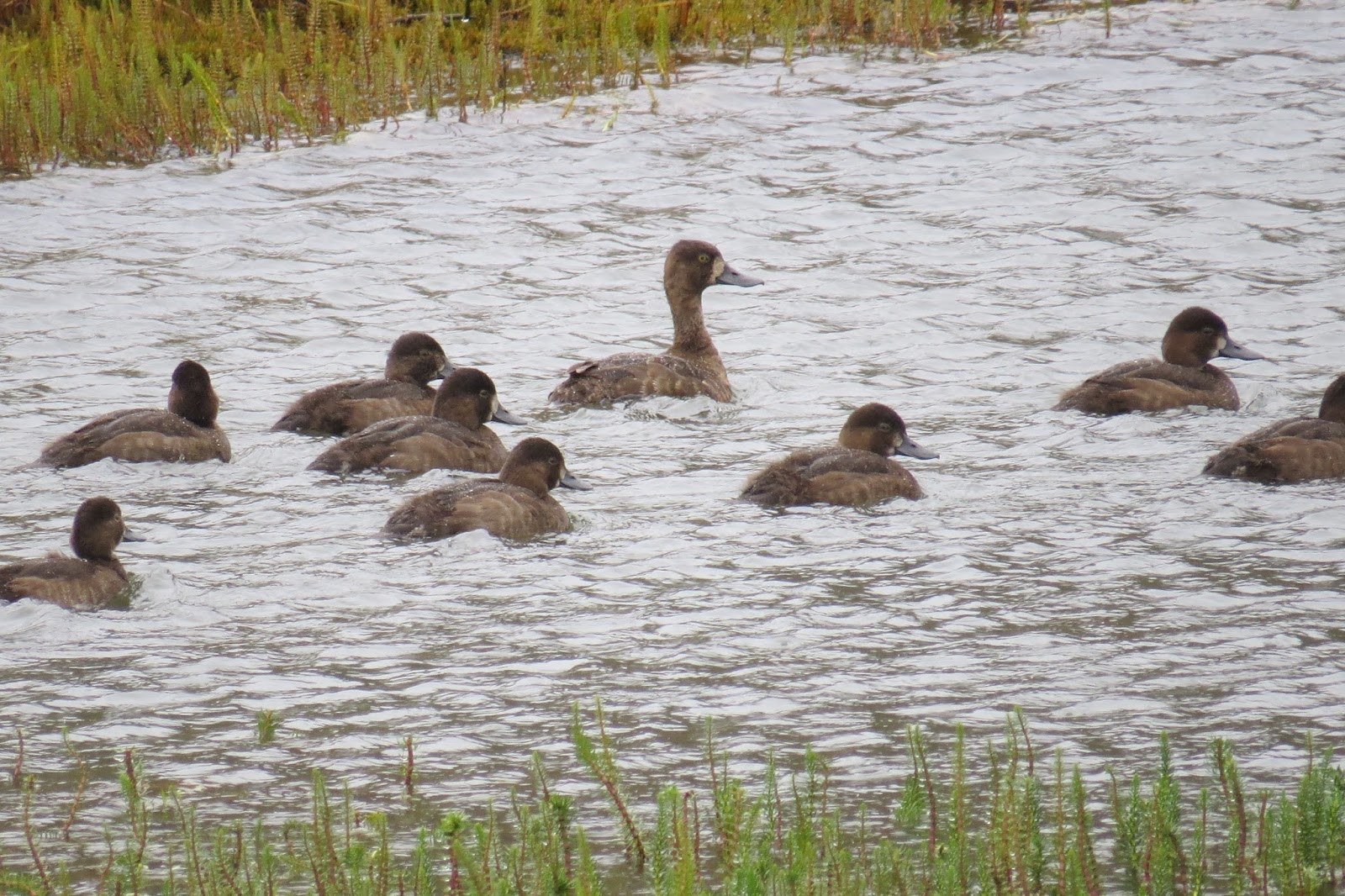
These ducks were floating in a tundra pond near the pass. We think they were female scaups but... why is her neck so much longer than the others'? 

We arrived at possibly the most remote US border crossing there is.

“You’re taking the ferry?” asked the young customs officer. “Not the Columbia I hope!” He told us he’d just moved up with his family from Arizona, but his ferry, the Columbia, had broken down twice. They left Bellingham a day late, then limped into Ketchikan at 30 knots where they remained for a couple days. “But, you know, it was the government moving us and paying, so we didn’t mind!” he added cheerfully. We told him we had been scheduled on the Columbia, but now we’d been shuffled around and given an extra night in Juneau. He wished us luck.

We followed the Chilkat River as it widened from a braided glacial stream to a wide saltwater inlet. Heavy rains were apparent in the rushing muddy flow, standing waves, and flooded brush.

The milepost warned us we'd be able to see "water wheels" along the highway. These large chain-link contraptions spin with the river and collect salmon for subsistence harvest.

We arrived in rainy Haines just in time for lunch.

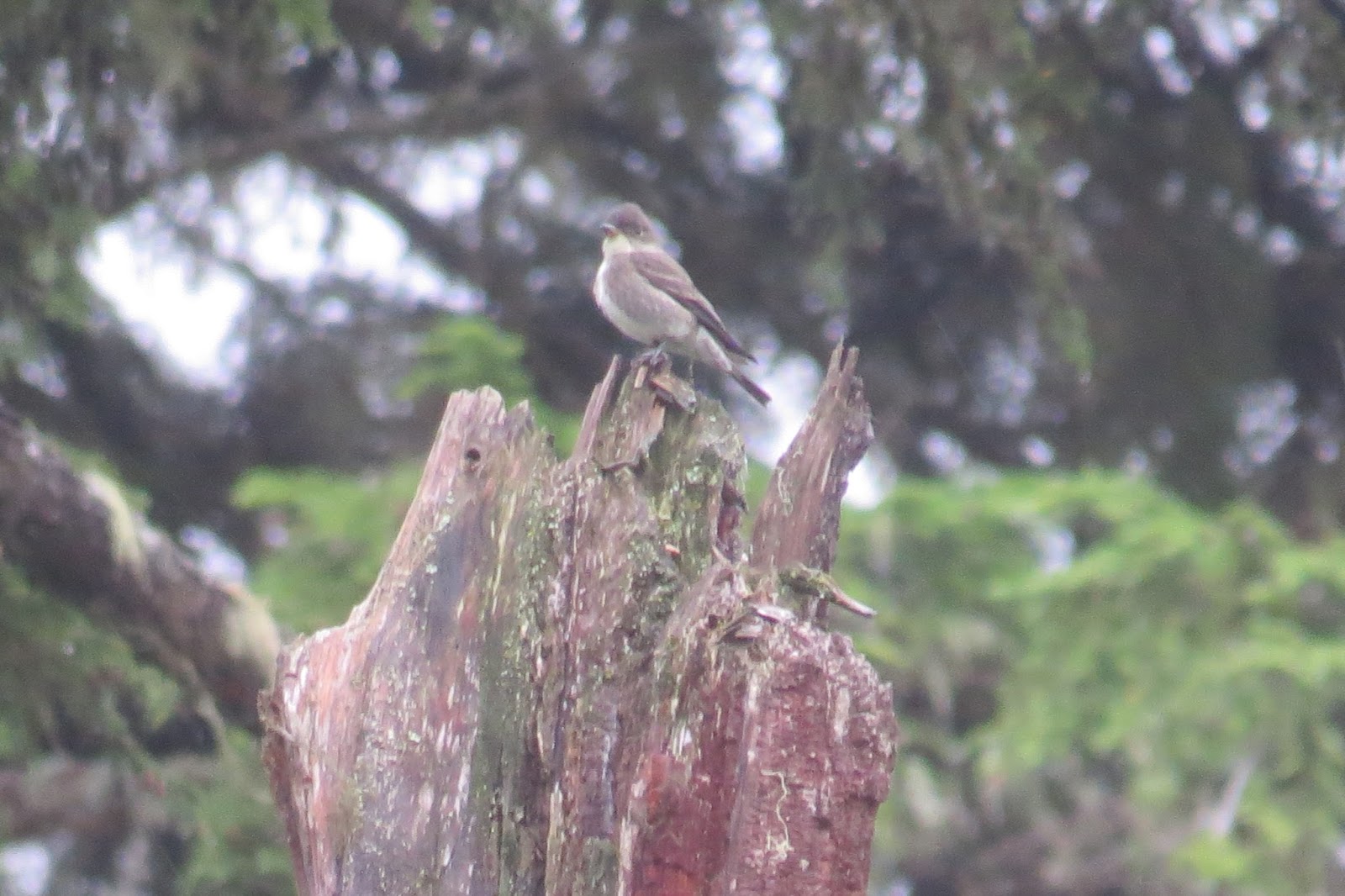
After a lunch of a pulled-pork sandwich at a Haines coffee shop, we birded the small boat harbor in full rain gear. It was fun to see the smaller, high-pitched northwestern crows on the same beach as larger, croaking common ravens. On the road by the ferry terminal, we ran into lots of unexpected songbirds out for a sing in the drizzle: an olive-sided flycatcher on the guardrail, a couple of bank swallows darting over a gravel pit, four harlequin ducks bobbing in a sheltered bay, and a flotilla of hundreds of surf scoters. Bald eagles and red-tailed hawks eyed us from towering Sitka spruce.

Glaucous-winged gull in the Haines Small Boat Harbor.

A mysterious dark raptor... perhaps a juvenile red-tailed hawk?

An American kestrel enjoying an afternoon by the sea.

Four Harlequin ducks.

An olive-sided flycatcher wearing its "vest."

A flotilla of surf scoters.

A juvenile common murre.

At one point we had parked the Prius in a gravel pull-out. Jane was across the road looking at the bank swallows through her binoculars, and I was trying in vain to get a photo, when a big yellow bulldozer barreled up the muddy side road straight toward us! I thought it was going to plow right through the Prius.

“MOM!” I yelled. She didn’t look, assuming it was another bird I’d seen. “MOM, MOVE THE CAR!” When she looked, she came running. The bulldozer stopped and a concerned young man hopped down.

“Y’all break down?” he asked. We shook our heads mutely. “You look terrified!” he laughed.

“We’re just looking at birds,” I managed.

“Oh! Okay then!” He waved as he continued to trundle down the mud road, away from our car. If Prius had emotions, she would have been quaking with relief.

Red Prius got muddy today. We're glad she didn't get crunched into scrap metal, too.

Finally, it was time to load the Alaska State Ferry. Cold and wet, we braved the deck for an hour before giving in and buying a whole game-hen and mashed-potato dinner in the cafeteria.

There's our boat, the Le Conte.

We asked to share a table with a couple from Dallas on a monster road trip. I was gazing out the window absently when I noticed some strange puffy waves in the distance. “The water is hitting those island rocks out there and jetting up like a geyser,” I mentioned.

“Sounds like a whale,” our table mate said without looking up from her book.

We looked closer and, dude, she was right! Around six humpback whales were spouting and fluking. Those “rocks” were their knobby dorsal fins.

Sailor Nina keeps lookout.

Skipper Jane shows off the solarium where campers sleep.

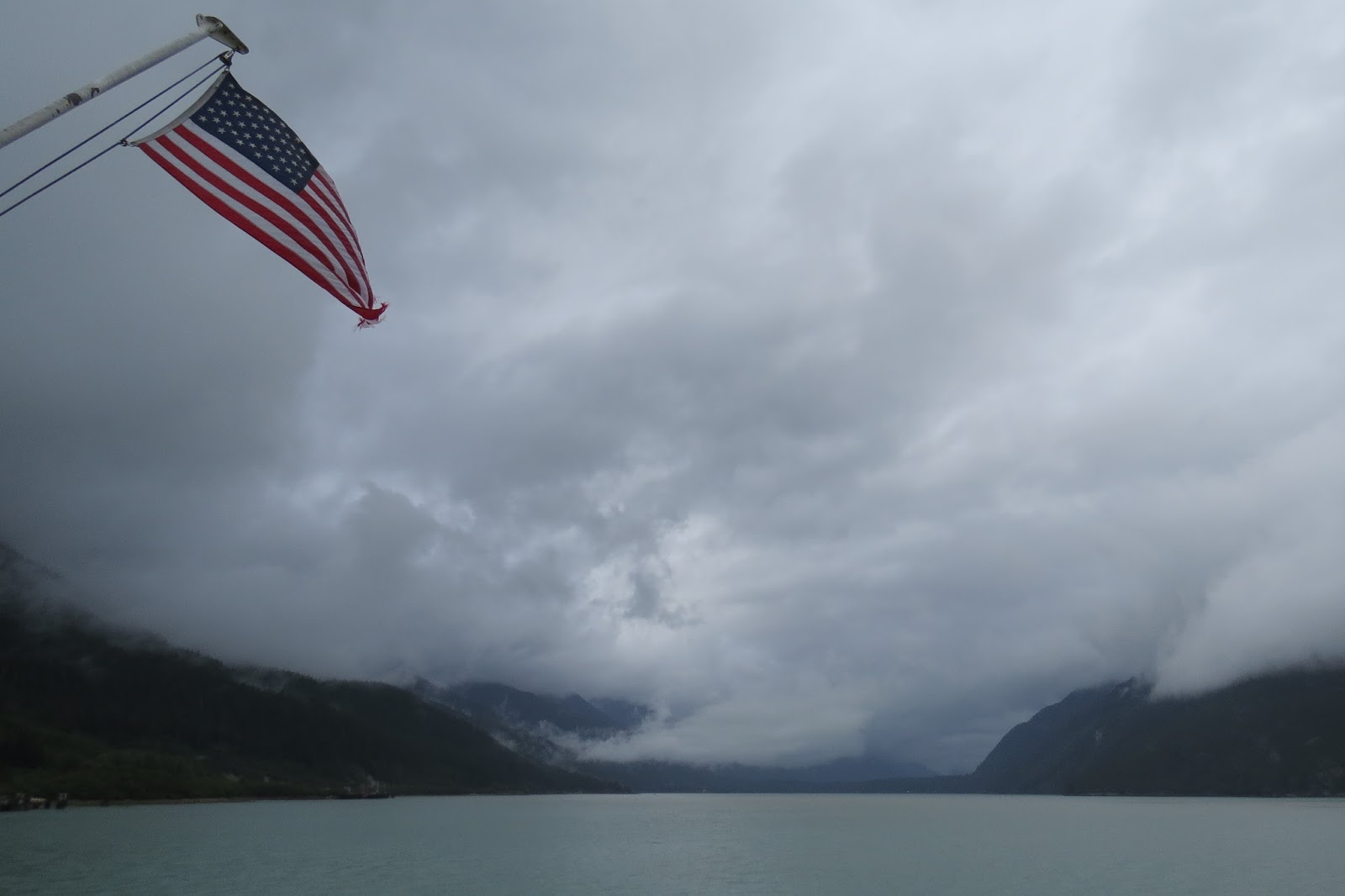
Low-hanging clouds shroud our view of the peaks erupting from the ocean.

We arrived at 9:30 pm to Auke Bay, drove 20 minutes into downtown Juneau (about as far as you can drive in this ice-field-and-ocean-locked town), and drank warm tea with our friend Marna before collapsing into her basement guest bed, exhausted, dry, and warm.

End of day summary:
  • Day of road trip: 14 
  • Start: Haines Junction, Yukon Territory, Canada 
  • Miles traveled: 165 (Prius) + 62 (ferry) 
  • Hours driven: 4 
  • Favorite bird sighting: olive-sided flycatcher 
  • End: Juneau, Alaska, United States
    Share:

    Spruce Beetle Sap: Day Thirteen of the Alaska Road Trip

    We left Tok, drove ten miles, checked our gas gauge, checked our map, headed back to Tok, got gas, and headed back out of town. Because the Tok-to-Haines-Junction section of the Alaska Highway is a repeat on our road trip (we passed through here on Days 5 and 6), we saw that particular 10-mile stretch of highway four times. Luckily, it was beautifully treed with yellowing aspens and populated with gray jays, kingfishers, ravens, and a merlin.

    A merlin on the much-traversed stretch of Alaska Highway.

    It was too rainy to stop in Tetlin National Wildlife Refuge, but we fondly recalled last week’s hikes to the row boat and beyond.

    After a substantial wait at the US-Canada border, we stopped in at our happy home from last week, Buckshot Betty’s, for second breakfast. Our harried waitress told us she was out of bacon, so no BLT’s, and my blueberry scone contained one blueberry. C’mon, Betty!

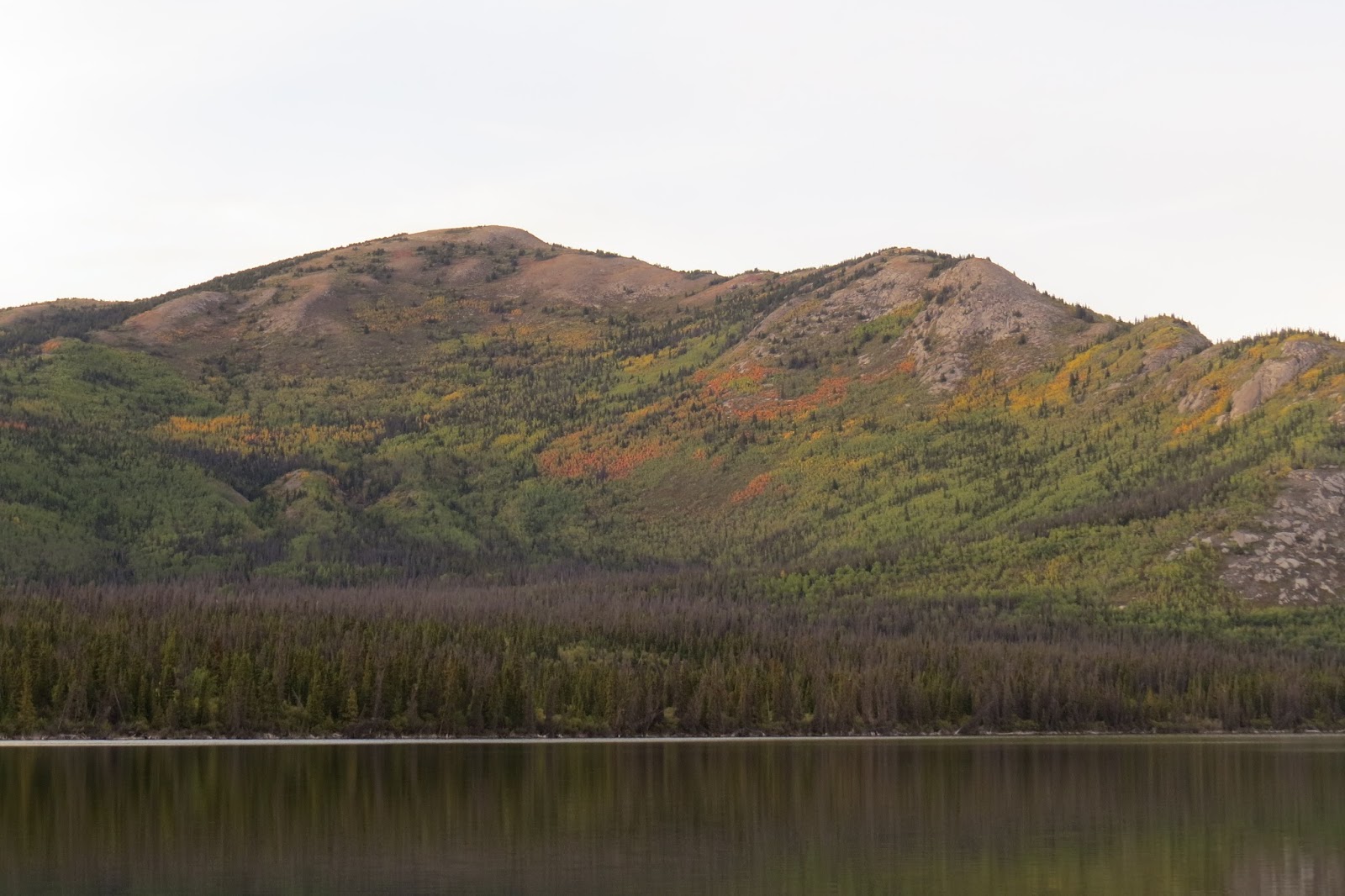
    It's already looking like fall in the Yukon.

    A black bear crossed the road in front of us, right before we stopped for the first of many road-construction delays. I swear, this “paved highway” is mostly dirt and gravel in the Yukon!

    Big mountains by the highway!

    Our less-than-accurate Birder’s Guide to Alaska told us to stop at Bear Creek Summit Pass for a trail into the alpine. Because nothing was signed, we pulled off at the high point of the mountain, parked next to a hibernating backhoe, and hiked up a brushy dirt road.

    Snow-capped peaks loomed above us.

    Jane worried I was scaring away the grouse and ptarmigans with my bear songs.

    I made lots of noise to alert both bears and any stray humans of our presence. Don’t worry, we saw nobody but juncos, a northern flicker, and sparrows (either chipping or white-crowned -- any birders to the rescue?!)

    Northern flickers are at home in the remote Yukon, or in my backyard in Walla Walla!

    It has a rufous stripe on either side of its head, a pink or orange beak, white wing bars, and a clear breast.

    ... we are torn between chipping sparrow (pale first winter) and white-crowned sparrow (taiga/interior west first winter).

    The one-mile Spruce Beetle Interpretive Trail was more inviting, with its informative signs and well-maintained trail, but it contained a total of zero birds.

    Welcome to a real trail.

    The lichens were plentiful, the red squirrels were agitated as usual, and a brown animal hopped out of sight as we rounded a corner. “A rabbit or a deer!” Jane proclaimed.

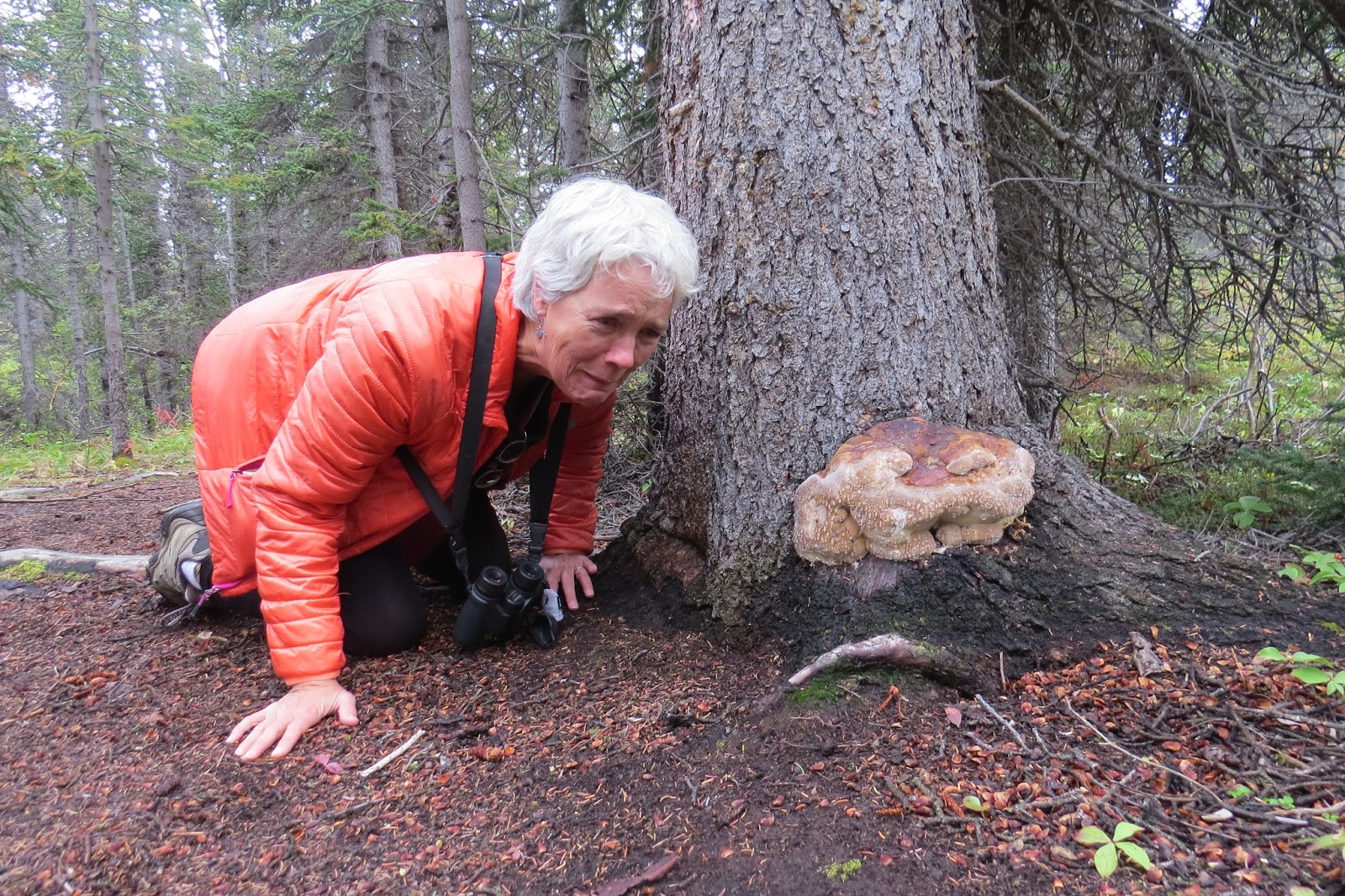
    Jane also made friends with this gnome-faced shelf fungus.

    We found this mushroom, oddly high in a spruce...

    ... Then its stasher came out to protect his snack!

    We learned all about the spruce beetle infestation that has caused thousands of acres of boreal forest to die in recent years, probably due to warmer winters.

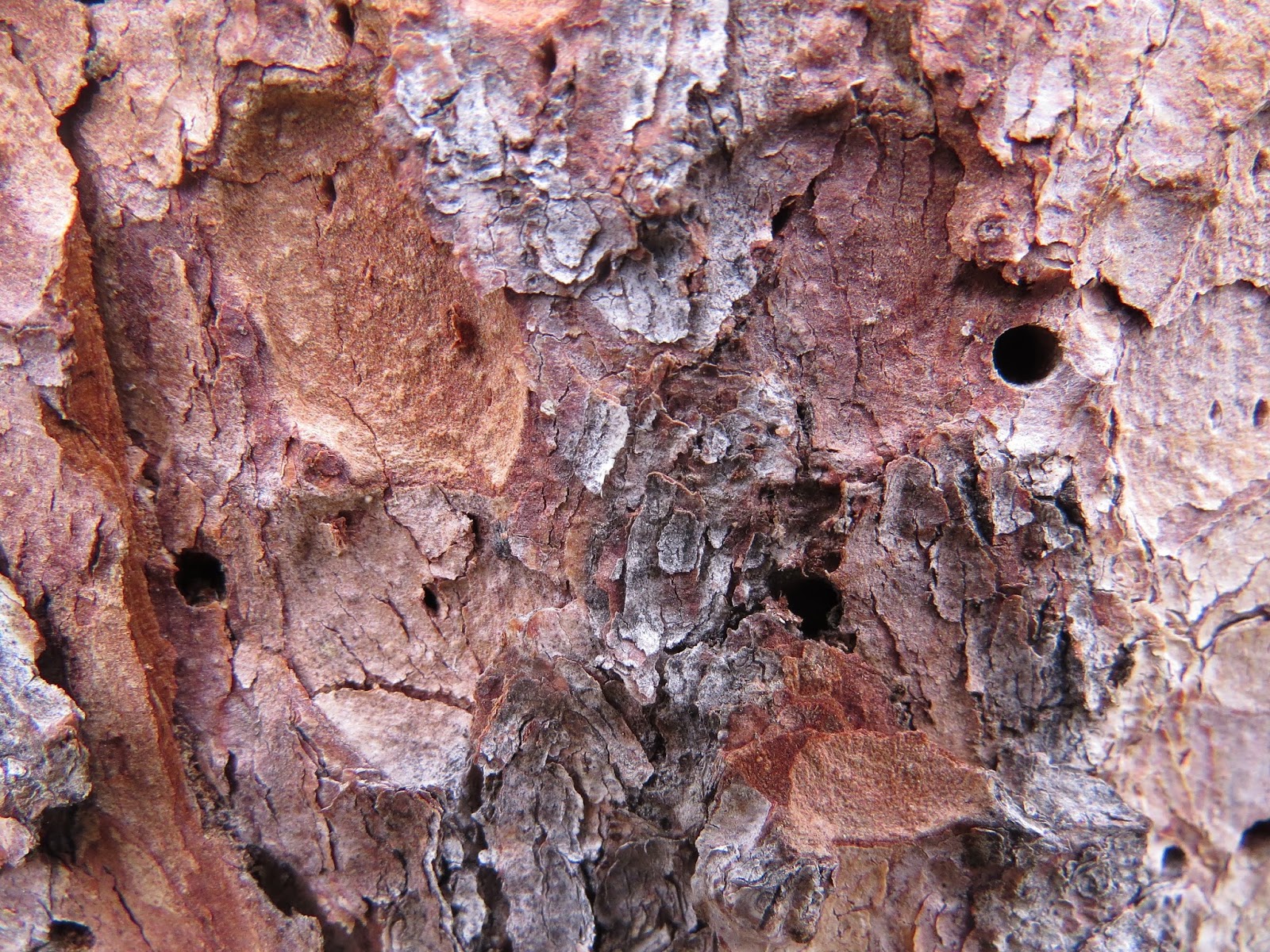
    The beetles drill through the bark of spruce trees, leaving these holes.

    Under the bark, their larvae tunnel and damage the tree's phloem.

    The tree's defense mechanism is to exude oodles of sap and flush the beetles out. This tree tried and failed. Now, a brittle snag, it resembles a wax-laden candelabra.

    Forgive me again, dear reader, as I prance into lichen land! (My mom had to forgive my lolly-gagging on many a hike as I stooped to take these photos.)

    Flaky freckle pelt, Peltigera britannica. (That's really the name!)

    Club moss.

    Little Cladonia turrets.

    British soldiers, Cladonia bellidiflora.

    At the end of the spruce beetle trail, we came upon a glorious mountain overlook.

    Ta-da!

    We gazed at this epic crevasse, pondered all the mountaineers who have lost their lives to such things, and decided never to climb tall mountains.

    As we drove down the highway into Haines Junction, we passed a dozen chocolate-brown snowshoe hares nibbling grassy bits on the shoulder, so that’s probably who we saw in the forest, too.

    A road-side snowshoe hare.

    The Raven Hotel was our nicest lodging yet, with shiny new furniture and crisp white linens. We thought it was 8:30 pm, and luckily the restaurants in Haines Junction close at 9:00 pm. Unluckily, there is an hour time change between Alaska and the Yukon, so it was actually 9:30 pm! The friendly owner of a bar called K. P. I. for Kluane Park Inn, serving “western and Chinese cuisine,” let us in. Jane ordered red wine and I asked for a bowl of egg flower soup. Instead, an enormous pot of steaming hot-and-sour soup arrived, loaded with shrimp, beef, chicken, regular pork, barbeque pork, and mushrooms. We finished the whole thing.

    Meanwhile, a couple from British Columbia decided to buy two of the oil paintings on the wall done by a local artist: a musk ox silhouetted against a flaming sunset, and a cedar waxwing picking red berries. “For our daughter in Whitehorse,” they explained as our waitress stood on my chair to remove the painting and its thumbtack from the fake brick wall.

    End of day summary:
    • Day of road trip: 13 
    • Start: Tok, Alaska, United States 
    • Miles traveled: 310 
    • Hours driven: 8 
    • Favorite bird sighting: merlin 
    • End: Haines Junction, Yukon Territory, Canada
    Share:

    Smoked Salmon in an Unexpected Row Boat: Day Six on the Alaska Road Trip

    Upon leaving Beaver Creek, we immediately came upon Canadian customs. “Alaska, here we come!” we thought, only to find that US customs were in another 30 kilometers. Which country lies in between? It’s unclear. After that minor hiccough, we did indeed cross the boundary into our own country. Finally!

    Welcome to Alaska!

    Our first business was to buy cheap gasoline: $3.00 per gallon instead of $1.30 per liter, you do the math. There, we met a mom and her young adult son who had driven all the way from Henryville, Indiana.

    The telephone poles on the US side of the border were not doing well in the melting permafrost. Many were only feet from being totally submerged.

    A roadside pond was packed with skittish ring-necked ducks, American wigeons, and mallards. They wouldn’t let us get within a half-mile; maybe this pond is open to duck-hunting?

    Two ring-necked drakes and one duck.

    An eager young ranger at the Tetlin National Wildlife Refuge was surprised at the direction we were headed. “Most visitors are headed south,” he told us. “Welcome to Alaska, ladies. You have the state to yourselves!” Jane spotted two distant trumpeter swans through the scope, and I read about the replica food cache that was used by early settlers and Native Alaskans to keep food and supplies safe from floods and rodents. According to the sign, frontier code stated that a stranger could break into any cache in an emergency, but was expected to fully replenish any supplies used.

    We checked out a free audio tour, and an assertive lady verbally guided us through the next several hours of beautiful country. I think we stopped at every short hike the Refuge offered: Seaton Roadhouse, Hidden Lake, Dead Man Lake, and Lakeview Campground.

    Seaton provided with a stunted black spruce forest, a posse of American robins, and two species of waterfowl: American wigeons and good ol’ mallards.

    Seaton Roadhouse lake.

    Two of the plentiful American wigeons.

    Hidden Lake offered the best surprise of our day.

    The boardwalk through stunted black spruce taiga.

    Lowbush cranberry.

    The 1.2 mile boardwalk through boreal forest brought us to a sparkling blue lake, a rack of red life-preservers, and a pair of flat-bottomed rowboats with handmade paddles (a 2x2 with a square slab of plywood nailed to the end).

    Unexpected rowboats!

    Handmade paddles.

    We paddled in a hybrid rowboat/canoe style to the middle of the lake, where we ate a smoked-salmon picnic and watched rainbow trout leap from the water. A couple from Holland took out the other rowboat. They had visited the very same lake 10 years before and seen beavers from their rowboat, but today only an empty lodge remained.

    Beavers abandon their lodges when the local supply of hardwood (willow and alder) saplings is depleted.

    Dead Man Lake was home to a scoter, a duck we normally associate with the ocean, but which occasionally ventures inland in summer.

    Lakeview Campground offered a photo blind, where we heard loud splashing near the shore. I thought it might be a bear, but mom was hoping for a moose or sage grouse. The culprit turned out to be a trio of mallards taking a raucous, splashy bath.

    SPLASH!

    Six adolescent ducklings is a feat to be proud of for mama mallard.

    We made it to the city of Tok and ordered take-out at the suggested eatery, Fast Eddy’s.

    Fast Eddy's in Tok, Alaska.

    We pulled out of town at 5:30 pm, 120 miles down, 210 to go. Jane and I entertained ourselves with Milepost-Chocolate-Chip Trivia through Delta Junction and North Pole (a town suffused in candy-cane stripes). As we pulled into Fairbanks, we saw a moose and two calves nibbling grass by the highway. Our Best Western was thrilling for four reasons: a pool, a printer, free ice, and laundry – all of which we took full advantage of before hitting the most comfortable beds of the week!

    End of day summary:
    • Day of road trip: 6
    • Start: Beaver Creek, Yukon Territory, Canada 
    • Miles traveled: 311 
    • Hours driven: 6 
    • Favorite bird sighting: ring-necked duck 
    • End: Fairbanks, Alaska, United States
    Share:

    Popular Posts

    Labels