Health Education, Health Articles, Health Blog

Showing posts with label Madaworks. Show all posts

Second Quarterly Report: Halfway through the Watson

Here we are, six months into the Watson year and six more to go. Below is my second quarterly report, one of the few deliverables required of me by the Watson Foundation. In case you missed it, you can read the first quarterly report here. Thanks for following along!

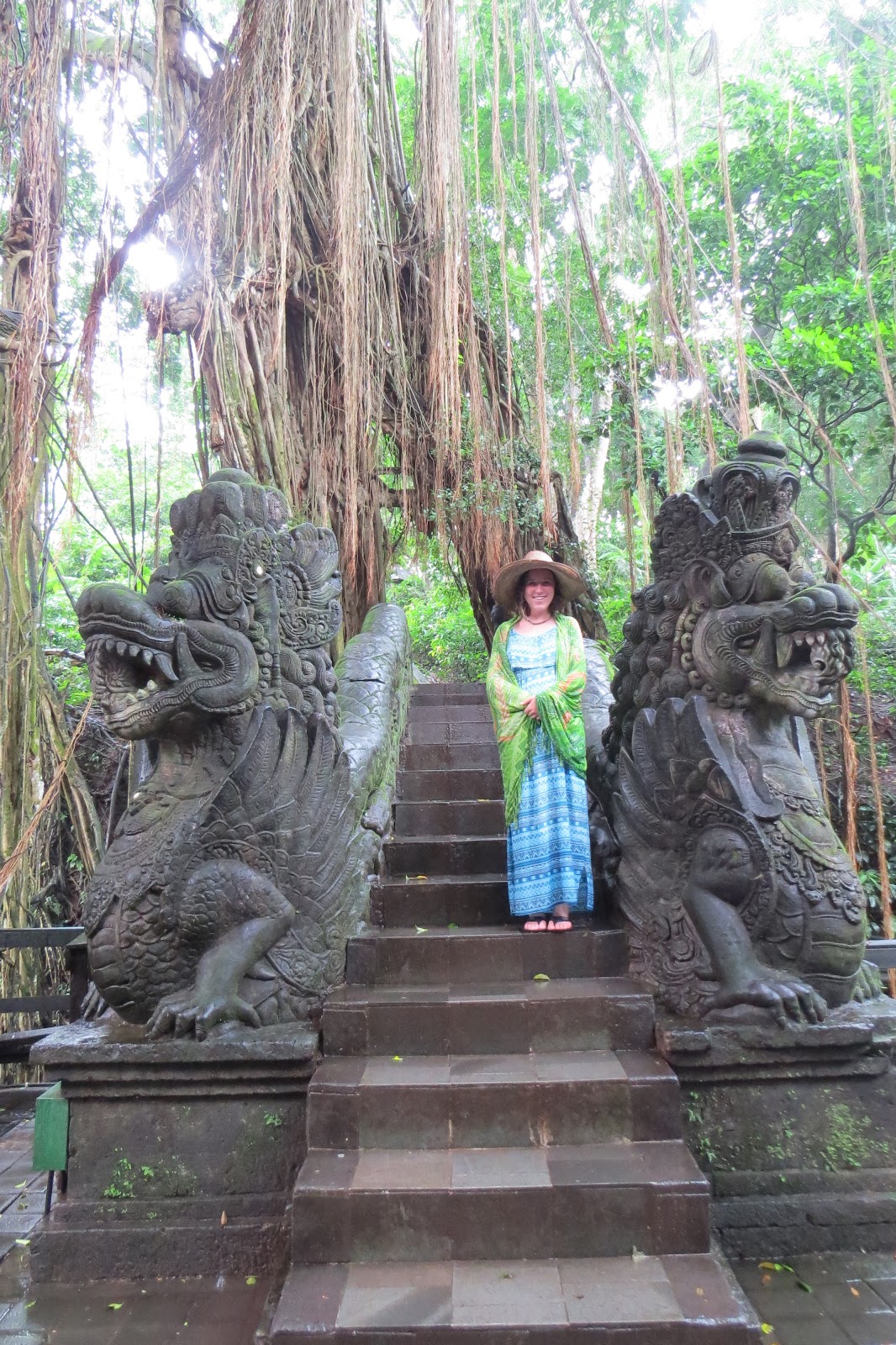
Draped in a cape of strangler-fig roots.

Second Quarterly Report


Date: January 27, 2018
Countries you were in: Madagascar, Indonesia
Countries for next quarter: Indonesia, Malaysia
Current location: Sanur, Bali, Indonesia

Dear Watson Foundation,

Apa kabar? Hai from Indonesia! Today I’m writing from the raised wooden floor of a gazebo on the roof of my homestay in Sanur, Bali. I’m surrounded by a sea of red tiles and stone shrines, adorned each morning with foods, flowers, and incense offered in folded banana leaves. I hear two roosters locked in a crowing battle. I have no idea where they’re hiding.

A crab-eating macaque and his mossy stone cousin in the Ubud Sacred Monkey Forest.

My flooded street in Sanur after a night of thunderstorms.

Last I wrote, I was finishing my first month in Madagascar. The challenges of that country did not get easier with time, but I did come to value them more. These struggles ranged from flesh-ripping vines to my heavy sense of guilt because the people with whom I lived had so few resources while I have so many. The average daily wage in Madagascar is $0.70, but poverty cannot be captured in a number. A house in a typical village around Ranomafana has a dirt floor and a thatch roof, with an open fire for cooking and black soot for breathing, but poverty cannot be described by architecture. Everyone I met told me stories of sand fleas burrowing into their feet because shoes were not in the budget, but poverty cannot be understood through parasites. I am just beginning to grasp the roots and results of Malagasy poverty after living amidst it for three months, so I cannot presume to convey it in a paragraph, but perhaps this conversation will give a taste of our global economic dissonance.

A mud-walled and thatch-roofed house in the tavy hills outside Ambatovory.

My superheroine guide, Menja, and I were sitting in one of our rainforest camps beneath a leaky blue tarp, biding our time until the afternoon when we would set lemur traps.

Menja: “I hate the rain.”
Me: “I love the rain! At my home in Seattle, it rains all the time.”
Menja: “Well, that makes sense. Because you have a raincoat that doesn’t leak.”
Me: “Oh. Good point.”
Menja: “And you have rain pants that don’t leak either, right?”
Me: “Yeah.”
Menja: “And your house – does it have a roof that doesn’t leak?”
Me: “Yes, it does have that.”
Menja: “And outside – you have sidewalks? So it’s not too muddy to walk in the rain?”
Me: “Ah, yes, we have sidewalks. No mud trails.”
Menja: “And shoes?”
Me: “Yes, shoes too.”
Menja: “And you have a car? So when you need to go, you are not walking?”
Me: “Yes, we do.”
Menja: “And furniture.”
Me: “Huh?”
Menja: “In your house. You have furniture, yes? So you can sit down while it rains?”

I couldn’t think of a response to that. I’d never thought of the connection between a recliner and a rainstorm, but to Menja it was obvious. In her experience, rain means crouching for hours in a smoky, one-room house with no furniture. Not only does my house have chairs, but it also has windows with glass, a furnace to heat it, electricity to keep the lights on, books to read, and a computer with WiFi to occupy me. Rain in Madagascar bears no relation to rain in Seattle. The water may be the same, but our experiences of rain could not be more different.

Following Menja down a slick, clay trail in the rain to conduct sand-flea interviews.

To fill the daylight hours in our field camps, I began bringing colored pencils and offering drawing lessons to the village kids who hung around after lunch, hoping for leftovers. One day, while hosting a gaggle of children to draw bugs and leaves on pages torn from my notebook, I was overwhelmed by the knowledge that these children deserved an education they would never be offered. Most had dropped out after fifth grade because no matter how hard their parents worked, they’d never earn enough to pay school fees. The unfairness tied my stomach in knots. Right then, I decided I would raise money for Madaworks, a small nonprofit that funds high-school education for Malagasy girls. In a blog post titled “The Power of Pencils,” I asked my readers to donate, and within two weeks we had exceeded my $1200 goal. The Madaworks founder, Diane, then challenged me to raise tuition for a full, three-year education for both girls, a total of $3600. As I uploaded more stories and photos, donations flowed in from teammates, family members, and even strangers who’d come across my blog. Now, as I type, we are $20 away from our new goal. I have received praise for this effort, but I ask myself, why do I have the power to run a fundraiser in the first place? My resources––contacts in the United States, writing experience, a camera, internet access––all come to me as unearned gifts. I do not deserve praise compared to the Malagasy girls who will receive these scholarships: they have overcome far greater obstacles to achieve what I have been given for free.

The kids of Bevoahazo, engrossed in my bird book and their scientific drawings.

As a side project, I interviewed 58 households about the sand flea, a translucent white parasite the size of a pinhead that burrows into skin around the toenails for four to six weeks unless someone digs it out with a needle. Sand fleas live in humans, pigs, and dogs, and they are zoonotic, meaning they can switch from animals to humans. I’d never heard of sand fleas, so I was astounded to learn that 100% of villagers had been infected by this parasite, and 12% were actively hosting sand-fleas at the time of my interview. How could I have studied zoonotic disease for years and never heard of this parasite that infects millions or billions of people? I had wonderfully enlightening conversations with mothers about the health of their families, but the interviews weren’t always easy. One angry man told me he wanted nothing to do with my survey if I wasn’t going to give him medicine for his son’s feet, which left me feeling inadequate and sorry. I couldn’t provide medicine, because there is no medicine for sand fleas, but I did learn to offer small bags of salt, sugar and soap as compensation, and I taught each family how to sterilize their needles. Along with my lemur mentor, Dr. Zohdy, and climatologist Dr. Eronen, I submitted an abstract of our sand-flea research to the Planetary Health Alliance. If it’s accepted, I’ll present at the Annual Meeting in Edenborough, Scotland at the end of May. My hope is to incite more research and remedies for sand fleas by getting them added to the World Health Organization’s list of Neglected Tropical Diseases—yet my hope is tempered by the knowledge that all the diseases on this list will remain neglected until we, as a planetary community, devote far more resources to the injustice of poverty.

A female sand-flea, removed from my friend's finger with this needle. Photo credit: Cindy Capurso.

This foot had at least six sand-fleas embedded in it, making it hard for the child to walk and attend school.

On Christmas Day, my flight out of Antananarivo took me through the tiny island nation of Mauritius and the high-tech city-state of Singapore, whose airport includes a pool, movie theater, and butterfly garden. My final flight, to the Indonesian island of Bali, had plenty of room because Bali’s tourism has plummeted by 70% since its volcano, Mount Agung, began spewing ash in November.

Antananarivo from the air: a sprawling city surrounded by endless rice paddies.

Welcome to Mauritius, former home of the dodo. It must be the only country that is most famous for a species it forced into extinction.

Now what? My volunteer stint at Reef Check would not begin until mid-January, and I had no destination until then. After claiming my backpack, Marmelade, I spent a few hours trying in vain to meet other travelers and split a cab to anywhere. That’s when I met Francisca.

“Excuse me, are you looking for a ride?” I asked the petite woman swiping at her phone in frustration.

“Sure, I’m calling a GoJek,” she replied. She was a Portuguese civil engineer working in East Timor, I would soon learn, and she stops by Bali whenever she wants to go shopping or eat great sushi. Francisca took me to Kuta, the rowdy tourist town where backpackers converge to surf and party. The ride cost 13,000 rupiah – under $1.00 – and when we didn’t have exact change, the driver introduced me to Balinese generosity. “12,000 will be fine!” he said with a wide smile before driving away.

My second day in Kuta with two fast friends, Renne and Arlo.

That night, I met back up with Francisca for sushi (what else?) and checked into a capsule-bed hostel (it’s like sleeping in a very comfortable drawer). Once I got an internet SIM card and my new favorite apps, GoJek and MapsMe, I could navigate Bali as if it were my own city.

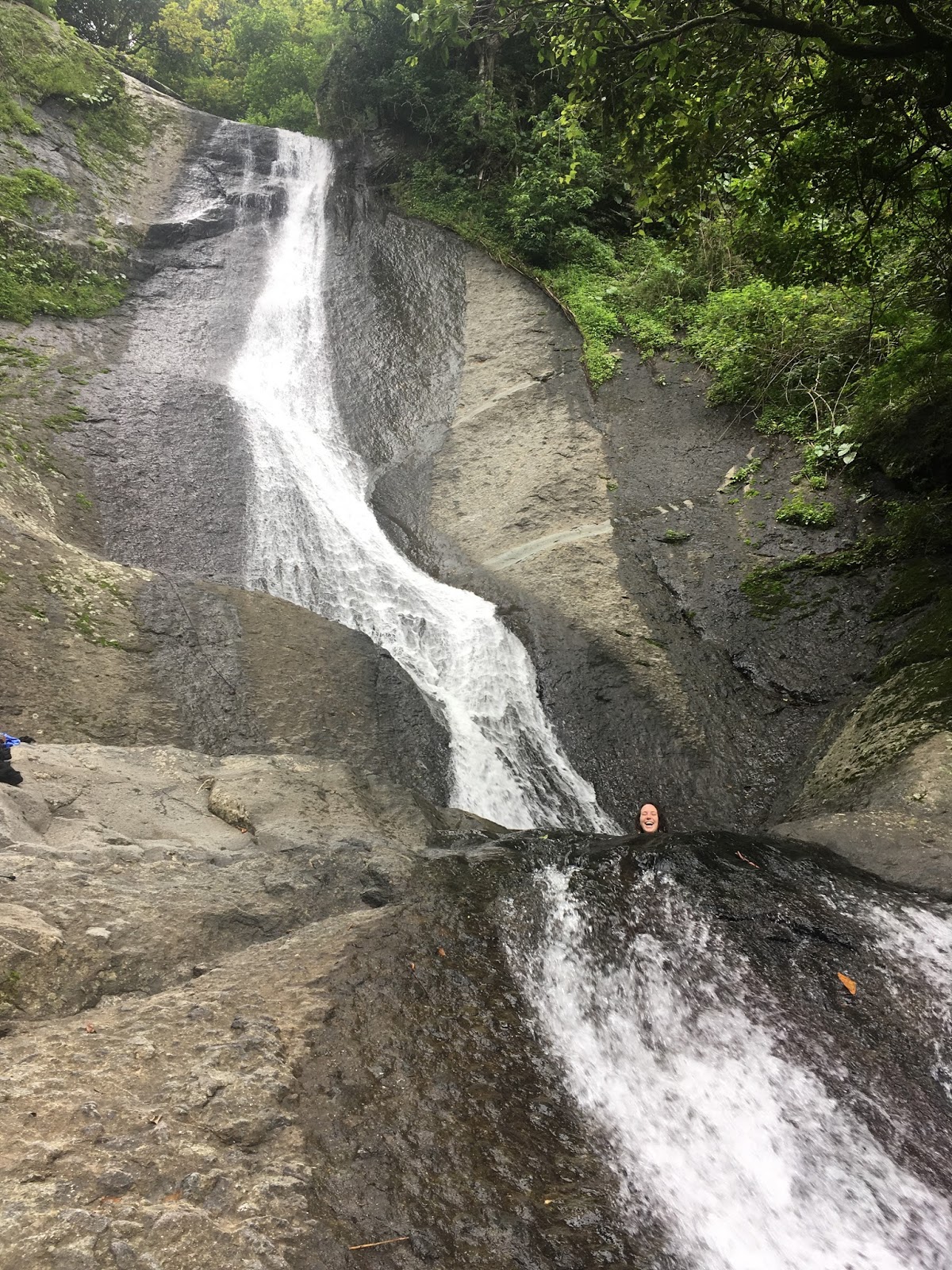
Can you spot my head? A secret waterfall flowing all the way down a mountain in West Bali.

Tracing Wallace's path to the ficus buttresses of Lombok.

I travelled from town to town, meeting new people and parting ways in a swirl of motion. I avoided eye contact with crab-eating macaques in the Ubud Sacred Monkey Forest, ate free banana pancakes at my favorite hostel, bargained for cheap sundresses in Kuta, and skinny-dipped in the Pacific Ocean to celebrate the first moments of 2018. In honor of Alfred Russel Wallace, I took a ferry from Bali to Lombok and whooped with excitement as we crossed Wallace’s Line. On Lombok, I examined giant millipedes, trekked to waterfalls, and read Wallace’s book, The Malay Archipelago, in the same steamy jungles where he wrote it.

Wallace would have loved to find this cicada...

... just down the trail from this cicada-mimicking moth. What notion about natural selection might it have inspired in his mind?

One afternoon, I hunched in a cramped bird-blind for an hour, sweat dripping off my nose and mosquitoes whining in my ears, as I waited for the green flash of an elegant pitta delivering insects to his chicks. I extended my Indonesian visa––a bureaucratic nightmare involving three visits to the Kantor Imigrasi––and became a certified rescue diver so I’ll be able to keep my fellow humans healthy while we examine the health of corals.

A stunning damselfly with translucent violet wings. (Any ideas, Thomas?)

I wonder if Wallace encountered quite as many giant millipedes as I did.

Late one Friday evening, I was bantering in a bar with a group of Balinese waiters, nursing my ginger tea, when I heard the word frisbee. Huh? “Did someone say frisbee?” I asked. It turned out that one of the waiters, a programmer named Sam, plays pick-up ultimate frisbee on Saturdays. So began my love affair with Bali Ultimate. I now attend three weekly pickup games in different corners of the island, and I’ve joined a team, UB7, for the Nusatara Cup at the end of March. While I can survive without ultimate, I am not thriving unless I can chase a frisbee down across a swampy field, gasp after sprints, and stay out at dinner past dark with teammates because we’re having too much fun to say goodbye.

Sunday pick-up ultimate in Canggu.

Black leggings? White socks? Or just a great day of mudtimate?

A week into January, I finally reported for duty at the Reef Check office. My role is to assist Sila, an earnest conservation biologist one year older than me, with the implementation of Reef Check’s new Climate Change Adaptation Program. For more than a decade, Reef Check has been partnering with local fishermen and divers from Tejakula, a sub-district on the northern coast, to collect data on coral health. Now, I’m working on curriculum to teach these local partners about the theory behind climate change and its impact on coral bleaching. I enjoy wrestling these abstract concepts into accessible terms, but I’m ready for my move away from the computer screen and into the Tejakula communities.

My first Tokay gecko, Gekko gecko, a species with which I've been obsessed since elementary school. You can't tell from the photo, but this lizard was a foot long, and clinging to a vertical mural like it was the ground!

A couple weeks ago, as a facilitator for the International Student Conference on Global Citizenship, I had the chance to take 40 undergraduate and graduate students snorkeling over a coral reef. Most of the participants were studying business or international relations. None were biologists, and many had never used a snorkel before. A few confident swimmers held their breath and dove to get eye-to-eye with massive blocks of Porites coral, finger-like Acropora, mushroom-shaped Fungia and delicate Gorgonian sea-fans. As we treaded in the choppy water, one student surfaced and, still catching his breath, called out to me, “Why are the corals bleaching?” It might have seemed an absurd moment for a scientific lesson, two bobbing heads hollering back and forth across the din of an ocean, but to me it was perfect. How many times had this man heard the sad tale of climate change in a lecture and tuned it out? Only here, as saltwater coated his tongue and the algae-cloaked corpses of dead corals swayed in his vision, did the question really matter. He wasn’t raising his hand to ask me why corals bleached because it was going to be on an exam. He hollered across the ocean because he couldn’t wait, because suddenly the survival of these calcium-and-jelly organisms was personal.

After snorkeling, we explored Taman Tirta Gangga, a Hindu temple known for its fountain of youth.

At the end of February, I’m heading to Malaysia with my boyfriend, Collin, to explore climate activism in Kuala Lumpur, marine life around Perhentian Kecil, and street food in Penang. I can’t wait to show him a little slice of my Watson life. Then, I’ll move to West Kalimantan on Indonesian Borneo to work with Health in Harmony, a ground-breaking nonprofit that protects orangutans’ rainforest habitat by providing healthcare to the surrounding communities. Already, the connections from this year are circling around to find me again. By coincidence, I met the Health in Harmony directors in Madagascar, and a conversation over rice and zebu blossomed into a partnership on Borneo.

Who did I meet at the Conference on Global Citizenship but Aimee Razafimanjary, a Master's student from Fianaratsoa, Madagascar! We couldn't stop laughing and speaking Malagasy amid the organic lettuce-fields of Bali.

My friends ask me if the year feels like it’s going by too fast. I tell them no. I have noticed these six months passing, and I know where the time has gone: to cat vaccines and hamburger nights, to waterfall baths and lemur lice, to colored-pencil art and coral funerals and sobbing confessions to the stars. I don’t feel like the year is going by too fast, but I can’t imagine it being over. Here’s to the next six months!

What is this, a leaf for GIANTS?

Sincerely,
Nina
Share:

Madaworks Update: A Christmas Story from Tana

It's time for an update on my campaign to send two Malagasy girls to high school! For those of you just joining this story, check out:


I am continually amazed by the moments this project of mine has produced. Here's a Christmas story for you.

I was sitting on the floor of the Madagascar Underground Hostel in Antananarivo on Christmas Eve Eve (the day before the day before Christmas), scribbling thank-you notes on kids' drawings from the rainforest. I was rather conspicuous: in my pajamas because I was just getting over a nasty illness (have you ever had a fever that made your hands and feet go numb? I don't recommend it), surrounded by stacks of papers and stamps and ibuprofen, muttering addresses under my breath.

My fever-survival supplies: iPhone charger, electrolytes, antibiotics, suspiciously-pink Malagasy ibuprofen, two bottles of water, and the piece of plain toast I nibbled for a day.

Naturally, the other guests asked what I was up to. When I told them, one guest asked me to show him the Madaworks website, and I watched as he donated $600 on the spot. WOW. Another guest told me she couldn't donate online because she's Iranian and there's some weird embargo stuff... so she asked if she could just hand me some cash instead. (She didn't end up donating, but still, it's the thought that counts!) I couldn't believe the trust from these strangers, but after travelling in Madagascar, they were eager for a chance to help address this most obvious problem, the lack of education for young women.

Here's a breakdown by the numbers:

  • total donations so far: 30
  • from people I've never met: 7
  • from people I met playing frisbee: 7
  • from people I'm related to: 4
  • via PayPal: 6
  • via Venmo: 11
  • directly to Madaworks: 13
  • number of people who downloaded an app just to be able to donate: 1 (that I know of)
  • total money raised so far: $3,280
  • our goal: $3,600
  • percentage of goal raised so far: 91%

Because a lot of these donations flowed in around the holidays, I'll end with a story of my Christmas in Madagascar. I didn't have any family or old friends, but I was lucky to have the company of two new friends, Haja and Mahery. They came over to my hostel and helped me cook a Christmas Brunch that would've made the Lester Finleys proud.

It started on Christmas Eve. I spent the morning with Mahery, Haja, Haja's sister, and a trio of adorable nieces and nephews at a holiday gift market selling the incredible silver jewelry that Haja's family has been crafting for generations.

Selling silver is a family affair.

Then I walked to the enormous Antananarivo market, just before it closed, to buy groceries. That was an excellent adventure! I purchased potatoes and onions in the vegetable quarter, then wove through the dry goods stalls, a maze unlike any I've seen. Each stall stocks an unwieldy assortment of products. I managed to find the items on my list, but each from a different stall: ketchup, black tea, butter, a tiny bottle of oil, and dark chocolate. Then I held my nose and headed for the meat market, where I asked for hena kisoa, pork, the closest thing I could find to bacon. It was the end of the day, so I had to buy out the last hunks of meat hanging from the hooks of two different vendors. Mangoes, lychees, and bananas were easy (it's harder to avoid buying fresh fruit on these streets than to just give in and buy it, the vendors are so persistent), but the eggs were nowhere to be found. I asked everyone, "Aiza ny atody azafady?" Please, where are the eggs? Everyone had an answer: down that alley, around that corner, oh sure, eggs! But nobody had the eggs. Finally I found a girl cracking eggs into a cauldron of boiling soup, and I asked where she got her supply. A woman overheard and, eager to make a few cents, offered to find the eggs and bring them to me. Good luck, I thought, but I agreed. Five minutes later, she appeared holding a small plastic bag filled with straw and a dozen perfectly clean brown chicken-eggs. Christmas brunch was on!

The market is a sea of colorful umbrellas taking over the streets and sidewalks for miles of downtown Tana.

Christmas Eve was a breakthrough. If I'm being blunt, this city intimidates me. The traffic is aggressive, the streets take dizzying turns up cliffs, the air smells like diesel exhaust, and when I counted the number of times I was verbally bothered on the sidewalk, it was once every twenty seconds. Children beg for money, gripping your shirt and following you for blocks while whimpering, "Madame, madame." Men say hello in French whether or not you make eye contact. Taxi drivers block your path to ask if you might need a ride. Plus, I seem to get seriously ill whenever I enter this city. So, given all that, I was proud of myself for learning how to navigate the gritty streets confidently and finding a way to enjoy Tana for my last day here.

Mahery shows off our tropical fruit salad of mango, lychee, and tiny banana.

Haja scolded me for buying three normal mangoes and three squishy papaya-mangoes (woops!) but she quickly solved the problem by turning the squishy ones into juice.

Scrambled eggs and salty pork strips.

My babies: vegetarian and decidedly not-vegetarian home fries.

It wouldn't be Christmas without potatoes!

We cooked enough for a dozen people, and we served Christmas brunch to everyone who, for one reason or another, found themselves stuck in a backpackers' hostel on Christmas morning. Our happy family consisted of businessmen and hippie travellers, a young family in the process of moving houses, the cleaning and cooking staff, Haja, Mahery, and me.

Merry Christmas and Happy New Year to everyone reading this! If you're feeling inspired, perhaps you'd like to donate to my Madaworks campaign and get that final 9% of our goal reached, to send two Malagasy girls to a fully-funded, three-year, high-school education.

Here are three ways to donate:

PayPal: ninafinley176@gmail.com

Venmo: @Nina-Finley

Madaworks website: https://www.madaworks.org/donate/

And hey, let's also take a moment to be grateful for being 91% of the way there. Every supportive thought, message, and dollar has been a gift in this unconventional holiday season.

Now that I'm in Bali (what?! I know, I'm a little behind on the blog posts), writing thank-you notes has a very different vibe. I loved writing postcards from this low table in the back of a Balinese restaurant. Just look at that rice-paddy view, complete with a sitting-cushion and the sweetest ginger-lemon tea I've ever tasted.
Share:

Misaotra Betsaka: Fantastic News from Madagascar

In my last post three weeks ago, The Power of Pencils, I told you about my spontaneous, scientific drawing classes in the rainforest, and I asked for your help. My goal was to raise $1,200 for Madaworks, enough to fund one year of high school for two Malagasy girls.

This week in Torotosy, I brought scientifically accurate coloring sheets of local lemur species to a new group of kids and teenagers. Several of the adolescent girls brought their babies with them, deftly switching off between the tasks of learning, coloring, and soothing crying infants.

The coloration of the lemurs was... less than scientifically accurate, but highly creative!

Once the lemurs were colored, we got to the good part: designing an ecosystem in the background. This boy included trees, leaves, fruits, and even an endemic Vasa Parrot, or kevaka in the local parlance.
 
Team, I have fantastic news: we've done it, and we've done better! Here's the breakdown.

Donations through PayPal: 1
Donations through Venmo: 3
Donations directly to Madaworks: 7
Total donations (for those of you who aren't into math): 11
Total amount raised: $1805!!! (Enough for three years of school!)

Amazingly, the donors include two women I've never met, but who found my blog though mutual friends and were moved to help. Thank you to everyone---friends, family, strangers---who invested in this small dream of mine, whether by donating money or simply reading along and feeling a connection to this story.

This girl's blooming background steals the show from her purple-and-red lemur family.

Our local guide, "Miandry" Ramiandrisoa, joined in happily on the coloring. The next day, he took me for a botanical tour of the area, naming every single leaf we encountered. He hopes to put his local plant knowledge to use for my researchers in the future, and I hope so, too.

This artist added a second lemur baby to his drawing. Twins of this species are uncommon but not unheard-of.

If you zoom in, you'll see the artist's caption, written in pencil and totally unprompted: "Tiako Madagaskara Hasoaviko Tanindrazako." It translates roughly to, "I love Madagascar. I want to do good for the home of my ancestors." When I read this, I laughed and told him I love Madagascar too, so he added the word "Nina" for good measure.

Diane Powers, president and founder of Madaworks, has been in touch with me many times to express her gratitude. She has extended a challenge to all of us:

"It's so wonderful that you were able to raise the first year costs to add 2 more girls. Thank you again! Having said that, we still need to raise an additional $1200 per girl to complete the three years of high school - it's $600 per year per girl." (High school is only three years in Madagascar.)

So here it is, my new goal: to raise $3,600 to fund two Malagasy girls through an entire high-school education. 

It sounds like an ambitious goal, but we're more than halfway there already. A month ago, I wouldn't have thought it possible. Now, after being shocked and inspired by the generosity of all you Natural Selections readers, I think it just might be.

The big kids (around my age) had a great time drawing habitats for lemurs colored by the younger artists.

Here's the Torotosy bunch from one of our afternoon sessions.

The next day, we moved on to a more difficult task: collecting spiders, crickets, flies and pillbugs into a wide yellow bucket and sketching them from life. It was a success, and I was delighted to see that these kids, who are terrified of non-venomous snakes, were not the least bit squeamish about picking up spiders in their bare hands (a feat I am leery of myself.)

If you are moved and able, please consider helping get these girls to school. Here's how:

PayPal: ninafinley176@gmail.com

Venmo: @Nina-Finley

Madaworks website: https://www.madaworks.org/donate/

This Christmas, I'll be on a plane from Madagascar to Indonesia. I won't be asking for any gifts. Instead, I'm suggesting that my family consider making a donation to Madaworks. If you're looking for a way to celebrate the holidays while consuming a little less, feel free to steal this idea and ask your community of gift-givers to do the same. :)

The following week, I met Josia, a young woman just a few years older than me in the village of Ambodiaviavy. She found me on the path one day, asked for my notebook through gestures, and stopped right there to sketch me the legume tree we were standing next to. "Rapitso, sivy!" she said through her beaming smile. "Tomorrow, nine!" Sure enough, there she was at camp the next morning, ready to draw. She became our camp cook, and she passionately hopes to work for Centre ValBio as a guide. Here we are holding the drawings we made for each other. She drew the ubiquitous secondary-growth plant, longoza, and a passion-fruit vine with a diagram of how to make it into medicine against sand-fleas. (A zoonotic disease, she already knows what gets me excited!) I drew her favorite bird, the blue coua.

Here's the Torotosy bunch taking a break from coloring to inhale a few bowls of vary sy tsaramaso, rice and beans. I had to get my camera out fast because those beans didn't last thirty seconds! 
Share:

The Power of Pencils: Will You Help Me Send Two Malagasy Girls to School?

This past week, I camped in a fragment of forest near a village called Bevoahazo, and I nurtured a dream. As my colored pencils wore down to nubs, this dream grew stronger. I want to raise $1,200 and send two Malagasy girls to high-school for a year. Will you help me?

The kids of Bevoahazo show off one of our collaborative ecosystem drawings, complete with stream, frog, trees, a domestic duck, and a wild parrot labeled in English and Malagasy. 

Living in Madagascar has meant living amid poverty at a level I have never before experienced. At times, it has been a lesson in humility and gratitude. At other times, I feel shame because I don't deserve the resources I have while others lack shoes, food, medicine, and the chance to send their children to school. And there is part of me that feels paralysis, because I do not deserve this power to pity and donate. My capacity to be generous, raise money, and be thanked -- all these are just more privileges associated with my undeserved economic status. Yet, to do nothing is not a reasonable solution. As it happens, I have an undeserved amount of resources. What to do?

A close-up of our ecosystem drawing.

The answer came to me when I learned of a scrappy, young charity called Madaworks. It was founded right here in Ranomafana two years ago, in November 2015, by a Long Islander named Diane Powers. I read about Madaworks while flipping through VaoVao ValBio, the newsletter of the rainforest research station where I'm currently living. An excerpt:

"Madaworks is improving development in the Ranomafana region through: access to secondary education for girls from rural villages and economic empowerment of women. ... To date we have graduated one student (Julie Rakotozafy) from Sahavondronona. Her achieving her high school diploma inspired her to begin university studies in nursing. In the fall of 2016 Madaworks funded two girls (Avontrinaina Louise Sarah and Ravosolo Paquerette) on the path to a fully funded three-year high school education. Two more students will be selected to receive scholarships September 2017. Next year we hope to support at least 10 more girls. Centre ValBio staff provide support and logistical assistance in distribution of scholarship applications and disbursement of funds to the schools and the students."

For every $600 Madaworks receives, it can fund one year of high-school education. Unlike too many charities in Madagascar, Madaworks is accountable to their students for the long-term. They only take on as many students as they can fund for an entire secondary education. Best of all, Madaworks checks in on their scholars regularly, providing guidance and mentorship.

They've been featured by Mongabay and Women Deliver for their dual benefit to people and biodiversity through empowering girls.

There are more needs in this region that I could ever hope to meet as an individual. Everything I offer is accepted into grateful hands: extra band-aids, a bottle of ibuprofen, a sewing needle, sunscreen, pens, leftover soggy rice. The shoes off my feet would be put to use here if I could spare them. So how did I decide to support girls' education?

Two moments clarified this mission for me.

1. When I spoke with my wonderful guides, Menja and Zaka, both explained how their lives revolve around the unreachable goal of funding their children's education. I have met smart, ambitious girls who want to go to school. No matter what sacrifices their parents make, no matter how badly their village wants to support them, no matter how ingenious they may be, these girls flat-out cannot afford it. Even public school costs money here, and most rural children must drop out after fifth grade. To attend high-school, students have to live in rented housing in the city, away from their families, and pay tuition. Menja and Zaka work hard, and they earn less than $2 a day. Free public education is something we take for granted in the United States, and here it is an unthinkable luxury. It shouldn't be. 

2. On my first day at camp this week, after lunch, three children appeared at the edges of our tarp. They were hoping for leftover food. Silent, still, they made themselves nearly invisible, not wanting to intrude on our privacy. Our team cook, Mana, handed them a bowl of soggy rice and salty beans with three spoons. The food disappeared in seconds. The children hovered, intrigued, tentative. I pulled a notebook and a bundle of colored pencils from my backpack.

"Inona no biby tianao?" I asked. "Sahy?" What's your favorite animal? Draw?

Quickly they took the invitation. All three replied with the same animal: varika, lemur. So we drew lemurs. More children appeared up the slick clay path through the forest. They didn't mind that we had no more rice to offer. They circled around and accepted one piece of precious paper each, with outstretched hands and soft thank-yous. We traded vocabulary, they writing the Malagasy and me adding the English. House, trano. Butterfly, tataro. Duck, giroka. Tree, hazo. Mosquito, moka. Parrot, kevaka. Vine, vahy. We graduated from organisms to ecosystems, swapping papers back and forth, weaving together vines and lemurs and frogs and streams and trees.

More children arrived every day, and I had to get creative to find hard surfaces for everyone to draw on. An upside-down bucket for 12-year-old Fano. My bird book for 6-year-old Vonona. A plate for 11-year-old Lalao. Then I had to get creative about subjects, the usual lemurs and parrots having lost interest. I sketched my study organism, a mouse lemur, tsitsidy, and held it up as an example. A dozen kids drew their own unique tsitsidy in response.

My first mouse lemur, labeled in Malagasy, English, and Latin. A dozen more were offered by the kids. Take a look at each one below. They're all different and they're all awesome, like their artists.


One afternoon, we did an exercise in scientific illustration. I asked each kid to gather one leaf -- "ravina iray" -- and bring it back. We each drew our leaves in realistic detail, not a cartoon idea of a leaf but the thing itself. How many spines? How many veins? What shade of green? We investigated weeds, compared ferns. I learned the names of a dozen trees in Malagasy.

Lemurs, trees, and humans coexist in this paper forest just like the real one around us.

Then we moved on to animals. We gathered frogs -- sahona -- and tadpoles -- boboka -- and even a swimming spider -- hala -- from the stream and drew those. When the kids proudly showed me their drawings of the spider, I told them they did a great job -- miatsa tsara -- but challenged them to count the legs of our arachnid friend.

"Tongotra hala firy?" I asked. How many legs does the spider have?

The kids leaned in over the bucket, jostling for position. They counted. "Valo!" yelled the first confident voice. "Valo! Valo!" agreed a chorus. Eight legs. They amended their drawings.

Then we moved on to the giant pair of twig-themed stick-bugs on a nearby plant.

"Tongotra biby-hazo firy?" How many legs does the stick-bug have?

"Enina!" Six.

"Tongotra vorona firy?" How many legs does the bird have?

"Roa!" Two.

"Tongotra varika firy?" How many legs does the lemur have?

"Efatra!" Four.

Then, just for fun: "Tongotra hazo firy?" How many legs does the tree have?

A small voice answered. It came from the seven-year-old named Vitatsara, with twin dimples in her cheeks and a quiet firmness to her presence.

"Iray." One.

"Eka," I laughed. Yes. I believe she was right. I'd noticed her the day before when an older boy had ripped her colored pencil from her hand, and she'd let it happen without a fight. I'd worried that she was too passive, allowing herself to be bullied. I realized now that she was simply too wise to engage in a petty fight. Today, she sat in front of the crowd, pencil firmly in hand, eyes focused on me.

Vitatsara and a few of her organisms.

When I brought the stick-bugs down off their leaf for show-and-tell, most of the girls recoiled in terror. Vitatsara watched me carefully, noting my calm handling of the harmless insect. She slowly extended one hand, offering a platform for its six legs. For the next half-hour, she and I passed the insect back and forth. It would crawl slowly up her arm, and just as it began to tickle her neck, I'd rescue it onto my own palm. When it reached my neck, she'd rescue it from me. The older children watched in fascination, and one by one they offered their hands to the tickling sensation of a six-legged stick.

Vitatsara shows off her new friend, the biby-hazo or stick-bug.

Biby-hazo namana, stick-bug friend!

What did I accomplish these afternoons? I had fun, and I passed my hours while the lemurs slept. All evidence suggests the kids had fun, too. Maybe a few of them learned English words, as I learned a few in Malagasy. I hope I helped cultivate biophilia: a love of nature, a curiosity about ecosystems and a compassion for organisms that nourishes my own life. Above all, I was filled with a desire to help these focused, curious kids continue to attend school for as long as they wish. I want them to have paper and colored pencils to sketch spider-webs after I leave. I want them to read books about the environment, about national politics, about anything and everything they please.

The bird and mammal field-guides I had provided as tables turned into the main attraction. The kids were fascinated to look at color photos of their neighborhood wildlife.

This desire means asking for help. I want to raise $1,200 for Madaworks. That's enough to send two girls to high-school for one year each. I hope that Vitatsara and the others girls who sketched leaves and lemurs will apply. I hope, by then, Madaworks will have enough funds to support them all the way to college. Will you hope with me?

Here are three native animals I sketched for the kids as gifts: a blue coua, a red-fronted brown lemur, and a greater vasa parrot.

I considered making Go-Fund-Me page, but those things keep a percentage of the money, so I decided I will ask for donations directly. If you are inspired and able to help, please send a donation of any amount to my PayPal, my Venmo, or the Madaworks website.

PayPal: ninafinley176@gmail.com

Venmo: @Nina-Finley

Madaworks website: https://www.madaworks.org/donate/

If you send the money to me, I will donate it to Madaworks. If you send money to Madaworks, please post a comment or send me a message letting me know so I can add it to the total for my $1,200 goal. I'll post regular updates to the blog so you can watch our progress as we work together to send girls to school.

Rasôna thanks me for a sketch I drew her of her favorite animal, varika, a male red-fronted brown lemur. Help me give her more than a drawing. Help me give her the chance to keep going to school.
Share:

Popular Posts

Labels